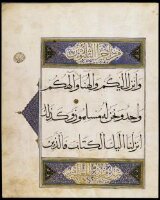
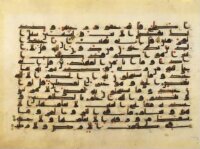
Qur'an Readings, Orthography, Scripts and Dotting Browser

Everything the museum's sources say about how the Qur'an is read and how it is written: the seven ahruf, the canonical readings, their imams and transmitters; the collection of the Qur'an under Abu Bakr and the copying of the codices under 'Uthman; the orthography (rasm) of the mushaf and the debate over writing it in ordinary (imla'i) spelling; its dots, vowel marks and other signs; and the scripts it has been written in, from Hijazi and Kufic to naskh, thuluth and Maghribi. Every verse, report and book passage is cited, and every opinion is attributed to the one who held it.

This build holds 1,523 records in 9 sections; each record lists its sources, and the texts were written by AI agents from those sources and have not yet been read by a human.

The browser's seven topics

  • The seven ahruf The report that the Qur'an was sent down in seven ahruf, its narrations, and what scholars said it means.
  • The readings The canonical and non-canonical readings, the Companions' readings reported in hadith, and the verses in which the readers differ.
  • Readers and transmitters The readers among the Companions and Successors, the seven and the ten imams and their transmitters, and the authors on the readings.
  • The collection and the codices The writing down of the revelation, Abu Bakr's collection, 'Uthman's copying of the codices and their dispatch to the cities, and the Companions' codices.
  • Orthography of the mushaf The spelling of the 'Uthmanic codices and its rules, the differences between the codices of the cities, and the debate over ordinary spelling.
  • Dots, vowel marks and signs The dots for case endings and the dots that tell letters apart, the vowel signs, the marks of tens and divisions, and the reports of early dislike and later acceptance.
  • Scripts and writing The pen, the ink and the pages in the Qur'an; the scripts of the mushaf from Hijazi and Kufic to the six pens and Maghribi; and the calligraphers.

The browser's method

This browser gathers what is said and written on four connected matters: how the Qur'an is read, how it is spelled in the codices, in which script it was written, and how it was dotted and vowelled. Qur'an verses come from a reviewed table: the verses on reading, measured recitation, the pen and the pages, and the verses in which the readers or the codices of the cities are recorded as differing. Qur'an text appears in the museum only from its frozen files, so a variant reading is described in words and never typed. Every other text — hadith, seerah, reports of the Companions and Successors, and books — is found at build time by a guarded lexicon over each passage, so a mention in a book harvested later appears the day its passage lands. The browser gives no verdict: where scholars differ, as on the meaning of the seven ahruf or on writing the mushaf in ordinary spelling, the record gives each view with its holder.

The whole set is available at /api/v1/qiraat.json

The art of Arabic writing

From slanting letters on parchment in the first century to gilded lines measured by the dot: the script the mushaf was written in became an art in its own right. Here the scripts stand side by side — the upright angles of Kufic, the clear suppleness of naskh, the majesty of thuluth, the breadth of muhaqqaq, the rounded sweep of Maghribi. Every image is a real manuscript or panel, with its source and licence.

103 images of 18 scripts; each image opens its own page with source and licence.

Script by script

Each script has its name, its time and its look. Read what it is and see pages written in it.

Hijazi script

An unofficial script used for the earliest Qur'an folios, in vertical format, named after the Hijaz; it is marked by right-slanting letter shafts, a final ya that turns back under the preceding letter, and scant consonant points and vowels.

Read the record ›

A manuscript page in Hijazi script: lines of handwritten Arabic script on a single leaf; see the caption for what the file page says about its marks.
Birmingham Qur'an manuscript, folio 1 rectoWikimedia Commons file "Birmingham Quran manuscript folio 1 recto.jpg" by Unknown, public-domain mark, https://commons.wikimedia.org/wiki/File:Birmingham_Quran_manuscript_folio_1_recto.jpg · Licence: PD
A manuscript page in Hijazi script: lines of handwritten Arabic script on a single leaf; see the caption for what the file page says about its marks.
Codex Parisino-petropolitanus, first leaf rectoWikimedia Commons file "Codex Parisino-petropolitanus, first leaf recto.jpg" by Unknown, public-domain mark, https://commons.wikimedia.org/wiki/File:Codex_Parisino-petropolitanus,_first_leaf_recto.jpg · Licence: PD
A manuscript page in Hijazi script: lines of handwritten Arabic script on a single leaf; see the caption for what the file page says about its marks.
Hijazi folio, BnF Arabe 334, f. 32r: red vowel dots and verse markersWikimedia Commons file "Qur'an folio in Hijazi script (BnF, Arabe 334, f. 32r).jpg" by Unknown, public-domain mark, https://commons.wikimedia.org/wiki/File:Qur%27an_folio_in_Hijazi_script_(BnF,_Arabe_334,_f._32r).jpg · Licence: PD

Ma'il script (the leaning hand)

A scholarly name given in the nineteenth century to an early slanting Qur'anic hand, taken from the reading ma'il in Ibn al-Nadim's list of mushaf scripts in Flugel's edition. That reading rested on a corrupt manuscript: the word Ibn al-Nadim used was…

Read the record ›

A manuscript page in Ma'il script: lines of handwritten Arabic script on a single leaf; see the caption for what the file page says about its marks.
Ma'il Qur'an page, British Library Or. 2165, f. 76vWikimedia Commons file "Page from the Ma’il Qur’an (BL Or 2165, f.76v).jpg" by Unknown, public-domain mark, https://commons.wikimedia.org/wiki/File:Page_from_the_Ma%E2%80%99il_Qur%E2%80%99an_(BL_Or_2165,_f.76v).jpg · Licence: PD

Kufic script

A family of angular Arabic scripts governed by geometric proportion that rose in the late seventh to early eighth century; named after Kufa rather than made there, it was the preferred script for copying the Qur'an until about the mid- to late tenth century.

Read the record ›

A diagram of Arabic letter forms and marks; see the caption for what it shows.
Diagram: evolution of early Arabic writing from no dots to Abu al-Aswad's red dots to al-Farahidi's signsWikimedia Commons file "Arabic script evolution.svg" by G Yassine Mrabet, CC BY-SA 4.0, https://commons.wikimedia.org/wiki/File:Arabic_script_evolution.svg · Licence: CC-BY-SA
A manuscript page in Kufic script: lines of handwritten Arabic script on a single leaf; see the caption for what the file page says about its marks.
Blue Qur'an folio, Raqqada National Museum of Islamic ArtWikimedia Commons file "Der blaue Koran,Kairouan.JPG" by Unknown, public-domain mark, https://commons.wikimedia.org/wiki/File:Der_blaue_Koran,Kairouan.JPG · Licence: PD
A manuscript page in Kufic script: lines of handwritten Arabic script on a single leaf; see the caption for what the file page says about its marks.
Kufic Qur'an folio, Cleveland Museum of Art: red vowel dots, gold verse markersWikimedia Commons file "Clevelandart 1933.493.b.jpg" by Unknown, CC0, https://commons.wikimedia.org/wiki/File:Clevelandart_1933.493.b.jpg · Licence: CC0

Floriated Kufic

A style of Kufic in which leaves, stems and blossoms sprout from the ends and uprights of letters, famous in the monumental inscriptions of Fatimid Egypt though attested there at least a century earlier.

Read the record ›

A ceramic vessel carrying an Arabic inscription in a decorated Kufic hand.
Turquoise dish carved with 'al-izz' in floriated Kufic, Metropolitan MuseumWikimedia Commons file "Turquoise Dish with Carved Arabic Inscription in Floriated Kufic Reading "al-'izz" ("Glory") MET DP247849.jpg" by Unknown, CC0, https://commons.wikimedia.org/wiki/File:Turquoise_Dish_with_Carved_Arabic_Inscription_in_Floriated_Kufic_Reading_%22al-%27izz%22_(%22Glory%22)_MET_DP247849.jpg · Licence: CC0
A ceramic vessel carrying an Arabic inscription in a decorated Kufic hand.
Ewer inscribed 'al-izz' in floriated Kufic, Metropolitan MuseumWikimedia Commons file "Ewer Inscribed with "al-'izz" ("Glory") in Floriated Kufic on its Neck MET DP247334.jpg" by Unknown, CC0, https://commons.wikimedia.org/wiki/File:Ewer_Inscribed_with_%22al-%27izz%22_(%22Glory%22)_in_Floriated_Kufic_on_its_Neck_MET_DP247334.jpg · Licence: CC0

New-style script ("eastern kufic")

A script that emerged in the late ninth century, traditionally called eastern or broken kufic and now often termed the "new Abbasid style"; it is marked by very upright shafts, razor-sharp angles and a strong contrast of thick and thin strokes.

Read the record ›

Two facing pages of a manuscript in New-style (eastern Kufic) script: lines of handwritten Arabic script; see the caption for what the file page says about them.
Parchment Qur'an in Eastern Kufic, Kairouan, 1020, David CollectionWikimedia Commons file "Parchment copy of the Quran written in Eastern Kufic, Kairouan, Tunisia, 1020, The David Collection, Copenhagen (1) (36270866531).jpg" by Richard Mortel, CC BY 2.0, https://commons.wikimedia.org/wiki/File:Parchment_copy_of_the_Quran_written_in_Eastern_Kufic,_Kairouan,_Tunisia,_1020,_The_David_Collection,_Copenhagen_(1)_(36270866531).jpg · Licence: CC-BY
A manuscript page in New-style (eastern Kufic) script: lines of handwritten Arabic script on a single leaf; see the caption for what the file page says about its marks.
Detached Qur'an folio in black eastern Kufic (new style), Iran, 11th centuryWikimedia Commons file "Qur'an folio 11th century kufic.jpg" by Unknown, public-domain mark, https://commons.wikimedia.org/wiki/File:Qur%27an_folio_11th_century_kufic.jpg · Licence: PD
A manuscript page in New-style (eastern Kufic) script: lines of handwritten Arabic script on a single leaf; see the caption for what the file page says about its marks.
Kufi New Style I fragment: red dots for vowels, later diagonal marksWikimedia Commons file "Kufi script (New Style I) - Qur'anic verses - 3.jpg" by Unknown, public-domain mark, https://commons.wikimedia.org/wiki/File:Kufi_script_(New_Style_I)_-_Qur%27anic_verses_-_3.jpg · Licence: PD

Maghribi script

A script developed and used mainly in Spain and North Africa, written freehand without fixed proportions; some scholars hold it the only script derived from kufic, and it was largely confined to manuscripts.

Read the record ›

A manuscript page in Maghribi script: lines of handwritten Arabic script on a single leaf; see the caption for what the file page says about its marks.
Folio from a ten-volume Qur'an in Maghribi script, Valencia, about 1220Wikimedia Commons file "Folio from a Ten Volume Qur'an.jpg" by Unknown, CC0, https://commons.wikimedia.org/wiki/File:Folio_from_a_Ten_Volume_Qur%27an.jpg · Licence: CC0
A manuscript page in Maghribi script: lines of handwritten Arabic script on a single leaf; see the caption for what the file page says about its marks.
Detached Qur'an folio in brown Maghribi script, 13th century, Freer GalleryWikimedia Commons file "Folio from a Qur’an, sura 5,12-13 (F1929.69).jpg" by Unknown, public-domain mark, https://commons.wikimedia.org/wiki/File:Folio_from_a_Qur%E2%80%99an,_sura_5,12-13_(F1929.69).jpg · Licence: PD
A manuscript page in Maghribi script: lines of handwritten Arabic script on a single leaf; see the caption for what the file page says about its marks.
Calligraphic fragment in Maghribi script, sura al-Ma'ida, Library of CongressWikimedia Commons file "Maghribi script.jpg" by Unknown, public-domain mark, https://commons.wikimedia.org/wiki/File:Maghribi_script.jpg · Licence: PD

Naskh script

One of the six proportional pens, the small partner of thuluth, used for ordinary books and small Qur'ans; in Iran a large form, "revival naskh", was codified by Ahmad Nayrizi.

Read the record ›

A calligraphic panel in Naskh script: lines of Arabic writing arranged on a sheet.
Hilye panel by Hafiz Osman, Sadberk Hanim Museum, about 1670Wikimedia Commons file "Hilye by Hafiz Osman from Sadberk Hanim Museum.jpg" by Hafiz Osman (as credited on the file page), public-domain mark, https://commons.wikimedia.org/wiki/File:Hilye_by_Hafiz_Osman_from_Sadberk_Hanim_Museum.jpg · Licence: PD
A manuscript page in Naskh script: lines of handwritten Arabic script on a single leaf; see the caption for what the file page says about its marks.
Ibn al-Bawwab Qur'an, Chester Beatty Library Is 1431, chapters 91 to 94Wikimedia Commons file "Ibn al-Bawwab - Qur'anic Manuscript.jpg" by Ibn al-Bawwab (d. 1022), as credited on the file page, public-domain mark, https://commons.wikimedia.org/wiki/File:Ibn_al-Bawwab_-_Qur%27anic_Manuscript.jpg · Licence: PD
A manuscript page in Naskh script: lines of handwritten Arabic script on a single leaf; see the caption for what the file page says about its marks.
Al-Fatiha in naskh script, Library of Congress fragmentWikimedia Commons file "Al Fatihah - naskh script.jpg" by Unknown, public-domain mark, https://commons.wikimedia.org/wiki/File:Al_Fatihah_-_naskh_script.jpg · Licence: PD

Thuluth script

One of the six proportional pens, the large partner of naskh, used for large Qur'ans and often to decorate portable objects and architectural surfaces.

Read the record ›

A calligraphic panel in Naskh script: lines of Arabic writing arranged on a sheet.
Hilye panel by Hafiz Osman, Sadberk Hanim Museum, about 1670Wikimedia Commons file "Hilye by Hafiz Osman from Sadberk Hanim Museum.jpg" by Hafiz Osman (as credited on the file page), public-domain mark, https://commons.wikimedia.org/wiki/File:Hilye_by_Hafiz_Osman_from_Sadberk_Hanim_Museum.jpg · Licence: PD
A manuscript page in Thuluth script: lines of handwritten Arabic script on a single leaf; see the caption for what the file page says about its marks.
Album folio in Thuluth script copied by Ala al-Din Tabrizi, 1580Wikimedia Commons file "Folio of an album in Thuluth script.jpg" by Ala al-Din Tabrizi (as credited on the file page), public-domain mark, https://commons.wikimedia.org/wiki/File:Folio_of_an_album_in_Thuluth_script.jpg · Licence: PD
Two facing pages of a manuscript in Thuluth script: lines of handwritten Arabic script; see the caption for what the file page says about them.
Baybars al-Jashankir Qur'an, double page of Sura al-Fatiha, British LibraryWikimedia Commons file "Double page from the Sultan Baybars Qur'an. Sura Al-Fatiha (BL Add Ms 22406, ff.2v-3r).jpg" by Muhammad Ibn al-Wahid / Aydughdi ibn 'Abdallah al-Badri / Abu Bakr Sandal, public-domain mark, https://commons.wikimedia.org/wiki/File:Double_page_from_the_Sultan_Baybars_Qur%27an._Sura_Al-Fatiha_(BL_Add_Ms_22406,_ff.2v-3r).jpg · Licence: PD

Muhaqqaq script

One of the six proportional pens, the large partner of rayhan, suited to large Qur'ans; Ahmad ibn al-Suhrawardi wrote the colophon of the "Anonymous Baghdad Qur'an" (707 AH) in it.

Read the record ›

A manuscript page in Muhaqqaq script: lines of handwritten Arabic script on a single leaf; see the caption for what the file page says about its marks.
Anonymous Baghdad Qur'an, opening of juz' 10, Museum of the Islamic EraWikimedia Commons file "Folio from a Qur'an Manuscript, circa 1305-1307 CE, National Museum of Iran.png" by Muhammad ibn Aybak ibn 'Abdallah / Ahmad al-Suhrawardi, public-domain mark, https://commons.wikimedia.org/wiki/File:Folio_from_a_Qur%27an_Manuscript,_circa_1305-1307_CE,_National_Museum_of_Iran.png · Licence: PD
A manuscript page in Muhaqqaq script: lines of handwritten Arabic script on a single leaf; see the caption for what the file page says about its marks.
Page from a Qur'an in Muhaqqaq script, Ottoman Turkey, 15th century, AshmoleanWikimedia Commons file "Page from a Qur’an in muhaqqaq script (Ashmolean EA1993.394).jpg" by Unknown, public-domain mark, https://commons.wikimedia.org/wiki/File:Page_from_a_Qur%E2%80%99an_in_muhaqqaq_script_(Ashmolean_EA1993.394).jpg · Licence: PD
A manuscript page in Muhaqqaq script: lines of handwritten Arabic script on a single leaf; see the caption for what the file page says about its marks.
Muhaqqaq script, fully vocalised, with a gold verse marker, Library of CongressWikimedia Commons file "Muhaqqaq script 2 - Qur'anic verses.jpg" by Unknown, public-domain mark, https://commons.wikimedia.org/wiki/File:Muhaqqaq_script_2_-_Qur%27anic_verses.jpg · Licence: PD

Rayhan script

One of the six proportional pens, a smaller variant and partner of muhaqqaq, preferred for chancery documents, colophons, book covers and carpet pages.

Read the record ›

A calligraphic panel in Naskh script: lines of Arabic writing arranged on a sheet.
Hilye panel by Hafiz Osman, Sadberk Hanim Museum, about 1670Wikimedia Commons file "Hilye by Hafiz Osman from Sadberk Hanim Museum.jpg" by Hafiz Osman (as credited on the file page), public-domain mark, https://commons.wikimedia.org/wiki/File:Hilye_by_Hafiz_Osman_from_Sadberk_Hanim_Museum.jpg · Licence: PD
A manuscript page in Naskh script: lines of handwritten Arabic script on a single leaf; see the caption for what the file page says about its marks.
Ibn al-Bawwab Qur'an, Chester Beatty Library Is 1431, chapters 91 to 94Wikimedia Commons file "Ibn al-Bawwab - Qur'anic Manuscript.jpg" by Ibn al-Bawwab (d. 1022), as credited on the file page, public-domain mark, https://commons.wikimedia.org/wiki/File:Ibn_al-Bawwab_-_Qur%27anic_Manuscript.jpg · Licence: PD
A manuscript page in Rayhan script: lines of handwritten Arabic script on a single leaf; see the caption for what the file page says about its marks.
Page from the Qur'an copied by Arghun al-Kamili in Raihan and Naskh, Morgan LibraryWikimedia Commons file "Page from the Qur'an manuscript copied by Arghun al-Kamili (Morgan Library & Museum Ms M.840. 1 recto).jpg" by Abd Allah Arghun al-Kamili, public-domain mark, https://commons.wikimedia.org/wiki/File:Page_from_the_Qur%27an_manuscript_copied_by_Arghun_al-Kamili_(Morgan_Library_%26_Museum_Ms_M.840._1_recto).jpg · Licence: PD

Riqa' script

One of the six proportional pens, the small partner of tawqi', joining letters that normally stay apart, such as alif with lam or ra with ra, and used for documents, colophons and illuminated pages.

Read the record ›

A manuscript page in Naskh script: lines of handwritten Arabic script on a single leaf; see the caption for what the file page says about its marks.
Illuminated Qur'an incipit in vocalised Naskh, Walters W.577Wikimedia Commons file "Muhammad ibn Mustafa Izmiri - Right Side of an Illuminated Double-page Incipit - Walters W5771B - Full Page.jpg" by Unknown, public-domain mark, https://commons.wikimedia.org/wiki/File:Muhammad_ibn_Mustafa_Izmiri_-_Right_Side_of_an_Illuminated_Double-page_Incipit_-_Walters_W5771B_-_Full_Page.jpg · Licence: PD
Two facing pages of a manuscript in Riqa' script: lines of handwritten Arabic script; see the caption for what the file page says about them.
Mughal Qur'an of Akbar, double page with Muhaqqaq, Naskh and Riqa' headings, 1573-74Wikimedia Commons file "Double-page from the Mughal Qur'an manuscript (BL Add MS 18497, ff. 118v-119r).jpg" by Hibatallah al-Husayni, public-domain mark, https://commons.wikimedia.org/wiki/File:Double-page_from_the_Mughal_Qur%27an_manuscript_(BL_Add_MS_18497,_ff._118v-119r).jpg · Licence: PD
A manuscript page in Riqa' script: lines of handwritten Arabic script on a single leaf; see the caption for what the file page says about its marks.
Qur'an text page with a Riqa' chapter heading and vocalised Naskh, Walters W.567Wikimedia Commons file "Iranian - Text Page with Illuminated Chapter Heading for Chapter 4 - Walters W56724B - Full Page.jpg" by Unknown, public-domain mark, https://commons.wikimedia.org/wiki/File:Iranian_-_Text_Page_with_Illuminated_Chapter_Heading_for_Chapter_4_-_Walters_W56724B_-_Full_Page.jpg · Licence: PD

Tawqi' script

One of the six proportional pens, the large partner of riqa', marked by joining letters left unjoined in other scripts, such as dal and alif, and used for chancery documents and colophons.

Read the record ›

A manuscript page in Tawqi' script: lines of handwritten Arabic script on a single leaf; see the caption for what the file page says about its marks.
Album page with Naskh and Tawqi' calligraphy, Shiraz, 1339-40Wikimedia Commons file "A page from an album with naskh and toqi calligraphy.jpg" by Mohammad-Qasem and Yahya al-Jamali, public-domain mark, https://commons.wikimedia.org/wiki/File:A_page_from_an_album_with_naskh_and_toqi_calligraphy.jpg · Licence: PD
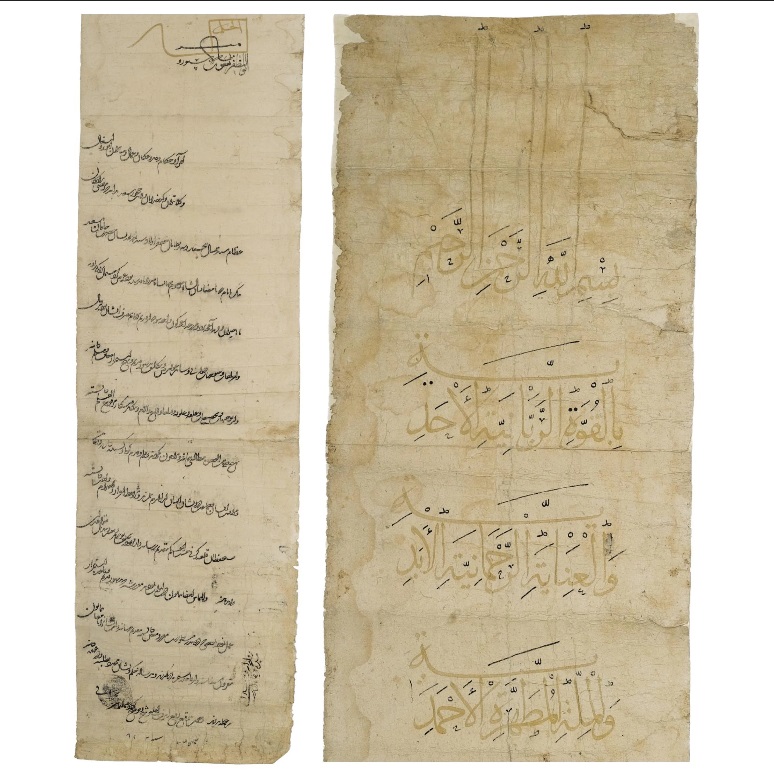
A long document in Tawqi' script: lines of calligraphic writing set out on a sheet.
Edict of the Aq Qoyunlu ruler Ya'qub: monumental Tawqi' above Ta'liqWikimedia Commons file "Edict of the Aq-Quyunlu ruler Ya'qub, Persia, Dated 19 Jumadi II.jpg" by Sotheby's, public-domain mark, https://commons.wikimedia.org/wiki/File:Edict_of_the_Aq-Quyunlu_ruler_Ya%27qub,_Persia,_Dated_19_Jumadi_II.jpg · Licence: PD
A manuscript page in Tawqi' script: lines of handwritten Arabic script on a single leaf; see the caption for what the file page says about its marks.
Qur'anic verses in Tawqi' script with Persian translation, Library of CongressWikimedia Commons file "Tawqi' script - Qur'anic verses.jpg" by Unknown, public-domain mark, https://commons.wikimedia.org/wiki/File:Tawqi%27_script_-_Qur%27anic_verses.jpg · Licence: PD

Ta'liq script

A chancery script whose name means "hanging", developed in Iran from the late thirteenth century and spread to Ottoman Turkey and India; marked by exaggerated descenders and words sloping up at line end, it served decrees and documents rather than poetry or…

Read the record ›

A manuscript page in Ta'liq script: lines of handwritten Arabic script on a single leaf; see the caption for what the file page says about its marks.
Folio in Ta'liq script, about 1540, Freer and Sackler GalleriesWikimedia Commons file "Ta'liq script 1.jpg" by Kamal al-Din (as credited on the file page), public-domain mark, https://commons.wikimedia.org/wiki/File:Ta%27liq_script_1.jpg · Licence: PD
A long document in Ta'liq script: lines of calligraphic writing set out on a sheet.
Farman of the Ilkhan Gaykhatu, June 1292, Taliq scriptWikimedia Commons file "Gaykhatu Farman.jpg" by Unknown, public-domain mark, https://commons.wikimedia.org/wiki/File:Gaykhatu_Farman.jpg · Licence: PD
A long document in Tawqi' script: lines of calligraphic writing set out on a sheet.
Edict of the Aq Qoyunlu ruler Ya'qub: monumental Tawqi' above Ta'liqWikimedia Commons file "Edict of the Aq-Quyunlu ruler Ya'qub, Persia, Dated 19 Jumadi II.jpg" by Sotheby's, public-domain mark, https://commons.wikimedia.org/wiki/File:Edict_of_the_Aq-Quyunlu_ruler_Ya%27qub,_Persia,_Dated_19_Jumadi_II.jpg · Licence: PD

Nasta'liq script

An elegant Persian script that grew in Shiraz and Tabriz in the second half of the fourteenth century from a merging of naskh and ta'liq; called the "bride of scripts", it became the script of Persian poetry and spread to Mughal India and Ottoman Turkey.

Read the record ›

A manuscript page in Nasta'liq script: lines of handwritten Arabic script on a single leaf; see the caption for what the file page says about its marks.
Album leaf of Nasta'liq signed Imad al-Hassani, Qazvin, about 1600, Aga Khan MuseumWikimedia Commons file "Album leaf (muraqqa') of nasta'liq, signed Imad al-Hassani (Mir Imad al-Mulk Qazvini Hassani), Iran, Qazvin, c. 1600 AD, ink, watercolour, and gold on paper - Aga Khan Museum - Toronto, Canada - DSC06877.jpg" by Photograph by Daderot; calligraphy signed Imad al-Hassani (Mir Imad), c. 1600, public-domain mark, https://commons.wikimedia.org/wiki/File:Album_leaf_(muraqqa%27)_of_nasta%27liq,_signed_Imad_al-Hassani_(Mir_Imad_al-Mulk_Qazvini_Hassani),_Iran,_Qazvin,_c._1600_AD,_ink,_watercolour,_and_gold_on_paper_-_Aga_Khan_Museum_-_Toronto,_Canada_-_DSC06877.jpg · Licence: PD
Two facing pages of a manuscript in Nasta'liq script: lines of handwritten Arabic script; see the caption for what the file page says about them.
Opening double page of a Qur'an in Nasta'liq, Shah Mahmud Nishapuri, 1538, Topkapi H.S. 25Wikimedia Commons file "Opening double page from the Qur'an in nasta'liq script (TKS H.S. 25, ff. 1b-2a).jpg" by Shah Mahmud Nishapuri, public-domain mark, https://commons.wikimedia.org/wiki/File:Opening_double_page_from_the_Qur%27an_in_nasta%27liq_script_(TKS_H.S._25,_ff._1b-2a).jpg · Licence: PD
A manuscript page in Shikasta script: lines of handwritten Arabic script on a single leaf; see the caption for what the file page says about its marks.
Page of Shikasta Nasta'liq calligraphy with floral margins, Iran, 1767, Art Institute of ChicagoWikimedia Commons file "Page of Shikasta Nasta'liq Calligraphy with Floral Margins (ARTIC 2014.1012).jpg" by Abdul Majid Taleqani (as credited on the file page), CC0, https://commons.wikimedia.org/wiki/File:Page_of_Shikasta_Nasta%27liq_Calligraphy_with_Floral_Margins_(ARTIC_2014.1012).jpg · Licence: CC0

Shikasta script

A Persian script whose name means "broken", developed in Iran after the sixteenth century; it links normally unjoined letters so a word can be written in one stroke — the Persian equivalent of shorthand — and gave rise to shikasta-nasta'liq for edicts and…

Read the record ›

A manuscript page in Shikasta script: lines of handwritten Arabic script on a single leaf; see the caption for what the file page says about its marks.
Calligraphy in Shakastah Nasta'liq by Abd al-Majid Taleqani, 1766, Golestan PalaceWikimedia Commons file "Calligraphy in Shakastah Nasta‘liq script.jpg" by Abd al-Majid Taleqani (as credited on the file page), public-domain mark, https://commons.wikimedia.org/wiki/File:Calligraphy_in_Shakastah_Nasta%E2%80%98liq_script.jpg · Licence: PD
A manuscript page in Shikasta script: lines of handwritten Arabic script on a single leaf; see the caption for what the file page says about its marks.
Page of Shikasta Nasta'liq calligraphy with floral margins, Iran, 1767, Art Institute of ChicagoWikimedia Commons file "Page of Shikasta Nasta'liq Calligraphy with Floral Margins (ARTIC 2014.1012).jpg" by Abdul Majid Taleqani (as credited on the file page), CC0, https://commons.wikimedia.org/wiki/File:Page_of_Shikasta_Nasta%27liq_Calligraphy_with_Floral_Margins_(ARTIC_2014.1012).jpg · Licence: CC0

Divani script

The chancery script of the Ottoman Imperial Council — "of the divan" — used for the body of firmans; intricate, compact and hard to read, its letters and words intertwine in a slight upward slope like a ship's bow.

Read the record ›

A calligraphic panel in Divani script: lines of Arabic writing arranged on a sheet.
Diwani calligraphy in the shape of a boat by Mehmet Izzet al-KarkukiWikimedia Commons file "Diwani Izzet al Karkuki.jpg" by Mehmet Izzet al-Karkuki (1841-1904), as credited on the file page, public-domain mark, https://commons.wikimedia.org/wiki/File:Diwani_Izzet_al_Karkuki.jpg · Licence: PD
A calligraphic panel in Divani script: lines of Arabic writing arranged on a sheet.
Calligraphy in Gali Diwani style by Mulla Ali, Istanbul, 1826Wikimedia Commons file "Diwani Gali 1826.jpg" by Mulla Ali (as credited on the file page), public-domain mark, https://commons.wikimedia.org/wiki/File:Diwani_Gali_1826.jpg · Licence: PD

Bihari script

A distinctive, stylised script used for Qur'an manuscripts in the Indian subcontinent from the fourteenth to the early sixteenth century: wedge-shaped letters with thick round bowls for endings, an alif pitched to the left and wide spaces between words. The…

Read the record ›

Two facing pages of a manuscript in Bihari script: lines of handwritten Arabic script; see the caption for what the file page says about them.
Double page from a Qur'an in Bihari script with Persian commentary, BnF Arabe 7260Wikimedia Commons file "Double page from Qur'an in bihari script.jpg" by Unknown, public-domain mark, https://commons.wikimedia.org/wiki/File:Double_page_from_Qur%27an_in_bihari_script.jpg · Licence: PD
A manuscript page in Bihari script: lines of handwritten Arabic script on a single leaf; see the caption for what the file page says about its marks.
Folio in Bihari script with Persian commentary in the borders, Library of CongressWikimedia Commons file "Bihari script.jpg" by Unknown, public-domain mark, https://commons.wikimedia.org/wiki/File:Bihari_script.jpg · Licence: PD

The Arabic script

Hisham al-Kalbi's abjad-kings of Madyan, the rawadif letters, and the Makki/Madani/Basri/Kufi line.

Read the record ›

A diagram of Arabic letter forms and marks; see the caption for what it shows.
Diagram: construction of the ideal letter sad after Ibn MuqlaWikimedia Commons file "Sad construction Ibn Muqla.png" by Man77, CC BY-SA 3.0, https://commons.wikimedia.org/wiki/File:Sad_construction_Ibn_Muqla.png · Licence: CC-BY-SA
A reed pen, a qalam, shown from the side, the bottom and the top.
A qalam, the calligrapher's reed penWikimedia Commons file "Qalam2.jpg" by Baba66 (assumed by Commons from the uploader), CC BY 2.5, https://commons.wikimedia.org/wiki/File:Qalam2.jpg · Licence: CC-BY

Celebrated mushafs

Manuscript mushafs the museum describes, from the earliest Hijazi leaves to the mushafs of sultans.

The Blue Qur'an

A 9th–10th-century Kufic Qur'an in gold on indigo-blue vellum — the most beautiful known Andalusi-Maghrebi mushaf, dispersed across museums.

Read the record ›

A manuscript page in Kufic script: lines of handwritten Arabic script on a single leaf; see the caption for what the file page says about its marks.
Blue Qur'an folio, Raqqada National Museum of Islamic ArtWikimedia Commons file "Der blaue Koran,Kairouan.JPG" by Unknown, public-domain mark, https://commons.wikimedia.org/wiki/File:Der_blaue_Koran,Kairouan.JPG · Licence: PD
Photograph of The Blue Qur'an from Wikimedia Commons
Photo: The Blue Qur'anWikimedia Commons; see file page for author and licence · Licence: CC-BY

The "Anonymous Baghdad Qur'an" (707 AH/1307–8)

A large thirty-part Qur'an made at Baghdad in 707 AH/1307–8 CE under the Ilkhanids, written by Ahmad ibn al-Suhrawardi, pupil of Yaqut, and illuminated by Muhammad ibn Aybak ibn Abdallah; possibly commissioned by the ruler or one of his viziers.

Read the record ›

A manuscript page in Muhaqqaq script: lines of handwritten Arabic script on a single leaf; see the caption for what the file page says about its marks.
Anonymous Baghdad Qur'an, opening of juz' 10, Museum of the Islamic EraWikimedia Commons file "Folio from a Qur'an Manuscript, circa 1305-1307 CE, National Museum of Iran.png" by Muhammad ibn Aybak ibn 'Abdallah / Ahmad al-Suhrawardi, public-domain mark, https://commons.wikimedia.org/wiki/File:Folio_from_a_Qur%27an_Manuscript,_circa_1305-1307_CE,_National_Museum_of_Iran.png · Licence: PD

Mamluk Qur'an Leaves

Mamluk Qur'an Leaves; V&A, accession MSL/1869/7217.

Read the record ›

Photograph of Mamluk Qur'an Leaves from the museum's open collection
Photo: Mamluk Qur'an Leaves© Victoria and Albert Museum, London. Embedded by URL from the V&A IIIF image service, never copied, under the V&A website terms and conditions (non-commercial use only, credit required, 768 px maximum): https://www.vam.ac.uk/info/va-websites-terms-conditions · Licence: VAM-NC

Qur'an Leaves, 950–1250

Qur'an Leaves, 950–1250; V&A, accession MSL/1939/1920.

Read the record ›

Photograph of Qur'an Leaves, 950–1250 from the museum's open collection
Photo: Qur'an Leaves, 950–1250© Victoria and Albert Museum, London. Embedded by URL from the V&A IIIF image service, never copied, under the V&A website terms and conditions (non-commercial use only, credit required, 768 px maximum): https://www.vam.ac.uk/info/va-websites-terms-conditions · Licence: VAM-NC

Mamluk Qur'an Bifolios

Qur'an Manuscript Folio (recto) [Right side of Bifolio]; Cleveland Museum of Art, accession 1933.473.1.a.

Read the record ›

Photograph of Mamluk Qur'an Bifolios from the museum's open collection
Photo: Mamluk Qur'an BifoliosCleveland Museum of Art; Open Access (CC0) · Licence: CC0

Seven-part Qur'an of Baybars al-Jashankir

Seven-volume Qur'an penned in gold by Ibn al-Wahid at Cairo in 704–5/1304–6 for the amir Baybars al-Jashankir and endowed to his khanqah in 707/1308 for Friday readings at the Mosque of al-Hakim.

Read the record ›

Two facing pages of a manuscript in Thuluth script: lines of handwritten Arabic script; see the caption for what the file page says about them.
Baybars al-Jashankir Qur'an, double page of Sura al-Fatiha, British LibraryWikimedia Commons file "Double page from the Sultan Baybars Qur'an. Sura Al-Fatiha (BL Add Ms 22406, ff.2v-3r).jpg" by Muhammad Ibn al-Wahid / Aydughdi ibn 'Abdallah al-Badri / Abu Bakr Sandal, public-domain mark, https://commons.wikimedia.org/wiki/File:Double_page_from_the_Sultan_Baybars_Qur%27an._Sura_Al-Fatiha_(BL_Add_Ms_22406,_ff.2v-3r).jpg · Licence: PD

Juz' 30 Qur'an, Iran

Juz' 30 Qur'an, Iran; V&A, accession MSL/1876/675.

Read the record ›

Photograph of Juz' 30 Qur'an, Iran from the museum's open collection
Photo: Juz' 30 Qur'an, Iran© Victoria and Albert Museum, London. Embedded by URL from the V&A IIIF image service, never copied, under the V&A website terms and conditions (non-commercial use only, credit required, 768 px maximum): https://www.vam.ac.uk/info/va-websites-terms-conditions · Licence: VAM-NC

Harari Qurans

Old mushafs written in Harar, Ethiopia in the Ajemi/African hand; witness to Islam's depth in the Horn of Africa.

Read the record ›

Photograph of Harari Qurans from Wikimedia Commons
Photo: Harari QuransWikimedia Commons; see file page for author and licence · Licence: PD

Nurse's Quran

A printed mushaf marketed in Turkey and Europe with a fabricated tale of a nurse who received ijaza; a cautionary case of legend presented as provenance.

Read the record ›

Photograph of Nurse's Quran from Wikimedia Commons
Photo: Nurse's QuranWikimedia Commons; see file page for author and licence · Licence: CC0

Thaalibia Quran

An Algerian mushaf written in Maghribi script in 1404 CE, kept at the Thaalibia library in Algiers; among the finest codices of the Maghreb.

Read the record ›

Photograph of Thaalibia Quran from Wikimedia Commons
Photo: Thaalibia QuranWikimedia Commons; see file page for author and licence · Licence: PD

Aryamehr Quran

A luxury mushaf commissioned in 1965 under the Shah of Iran; among the largest modern manuscript codices.

Read the record ›

A manuscript page in Naskh script: lines of handwritten Arabic script on a single leaf; see the caption for what the file page says about its marks.
Aryamehr Qur'an, page from the 1344 SH publication of Neyrizi's 1117 AH manuscriptWikimedia Commons file "Aryamehr Quran 02.jpg" by Ahmad Neyrizi (1087–1155 A.H), public-domain mark, https://commons.wikimedia.org/wiki/File:Aryamehr_Quran_02.jpg · Licence: PD

Birmingham Quran manuscript

Hijazi-script parchment folios at the University of Birmingham; radiocarbon dated 568–645 CE, among the oldest known Qur'an leaves.

Read the record ›

A manuscript page in Hijazi script: lines of handwritten Arabic script on a single leaf; see the caption for what the file page says about its marks.
Birmingham Qur'an manuscript, folio 1 rectoWikimedia Commons file "Birmingham Quran manuscript folio 1 recto.jpg" by Unknown, public-domain mark, https://commons.wikimedia.org/wiki/File:Birmingham_Quran_manuscript_folio_1_recto.jpg · Licence: PD
Photograph of Birmingham Quran manuscript from Wikimedia Commons
Photo: Birmingham Quran manuscriptWikimedia Commons; see file page for author and licence · Licence: PD

BnF Arabe 328(c)

Early Qur'anic folios held at the Bibliothèque nationale de France in Paris, among the oldest surviving Hijazi fragments.

Read the record ›

Photograph of BnF Arabe 328(c) from Wikimedia Commons
Photo: BnF Arabe 328(c)Wikimedia Commons; see file page for author and licence · Licence: PD

Gwalior Quran

An Indian mushaf written in 1399 CE in Gwalior; a witness to Qur'anic calligraphic tradition under the Indian sultanates.

Read the record ›

Two facing pages of a manuscript: lines of handwritten Arabic script; see the caption for what the file page says about them.
Double page from the Gwalior Qur'an copied by Mahmud Sha'ban, 1399Wikimedia Commons file "Double page from the Gwalior Qur'an.jpg" by Unknown, public-domain mark, https://commons.wikimedia.org/wiki/File:Double_page_from_the_Gwalior_Qur%27an.jpg · Licence: PD
Photograph of Gwalior Quran from Wikimedia Commons
Photo: Gwalior QuranWikimedia Commons; see file page for author and licence · Licence: PD

Isfahan Quran

A tenth-century mushaf in early Persian script; a witness to mushaf tradition in Iran.

Read the record ›

Photograph of Isfahan Quran from Wikimedia Commons
Photo: Isfahan QuranWikimedia Commons; see file page for author and licence · Licence: CC-BY-SA

Codex Mashhad

An early codex in the Astan Quds Razavi Museum in Mashhad attributed to the 1st century AH; a key witness of early Qur'anic script.

Read the record ›

Photograph of Codex Mashhad from Wikimedia Commons
Photo: Codex MashhadWikimedia Commons; see file page for author and licence · Licence: PD

Palermo Quran

A tenth-century mushaf in early Maghribi script whose folios dispersed among museums; a witness of Islamic Sicily to the Qur'anic text.

Read the record ›

Photograph of Palermo Quran from Wikimedia Commons
Photo: Palermo QuranWikimedia Commons; see file page for author and licence · Licence: CC-BY-SA

Codex Parisino-petropolitanus

The largest surviving early Hijazi codex; its folios split between Paris, Saint Petersburg and other libraries, covering about two-thirds of the text.

Read the record ›

A manuscript page in Hijazi script: lines of handwritten Arabic script on a single leaf; see the caption for what the file page says about its marks.
Codex Parisino-petropolitanus, first leaf rectoWikimedia Commons file "Codex Parisino-petropolitanus, first leaf recto.jpg" by Unknown, public-domain mark, https://commons.wikimedia.org/wiki/File:Codex_Parisino-petropolitanus,_first_leaf_recto.jpg · Licence: PD
Photograph of Codex Parisino-petropolitanus from Wikimedia Commons
Photo: Codex Parisino-petropolitanusWikimedia Commons; see file page for author and licence · Licence: PD

Samarkand Kufic Quran

The great Kufic mushaf attributed to Uthman (8th–9th c.) kept in Tashkent — among the oldest Qur'ans extant, holding about half the text.

Read the record ›

Photograph of Samarkand Kufic Quran from Wikimedia Commons
Photo: Samarkand Kufic QuranWikimedia Commons; see file page for author and licence · Licence: CC-BY-SA

Timurid Quran

A huge Timurid-era mushaf attributed to the workshops of Baysunghur and Umar Aqta; among the greatest Persian calligraphic treasures.

Read the record ›

Photograph of Timurid Quran from Wikimedia Commons
Photo: Timurid QuranWikimedia Commons; see file page for author and licence · Licence: PD

Topkapı manuscript

An early Qur'an codex kept in Topkapı Palace and attributed to Uthman ibn Affan; a key witness to the earliest Qur'anic text.

Read the record ›

Photograph of Topkapı manuscript from Wikimedia Commons
Photo: Topkapı manuscriptWikimedia Commons; see file page for author and licence · Licence: PD

Uthman Taha Quran

The Medina mushaf written by the Syrian calligrapher Uthman Taha; the world's most widespread printed codex, from the King Fahd Complex.

Read the record ›

Photograph of Uthman Taha Quran from Wikimedia Commons
Photo: Uthman Taha QuranWikimedia Commons; see file page for author and licence · Licence: CC-BY-SA

The Andalusian "Pink Qur'an" (13th century)

An Andalusian Qur'an of the early thirteenth century named for the pinkish hue of its paper, written in bold maghribi on paper thought to come from Jativa, with verse numbers in abjad letters; probably made for a royal or noble patron in Granada or Valencia.

Read the record ›

A manuscript page in Maghribi script: lines of handwritten Arabic script on a single leaf; see the caption for what the file page says about its marks.
Page from Surat al-Shu'ara of the Pink Qur'an, al-Andalus, 13th centuryWikimedia Commons file "المصحف الوردي 02.jpg" by Unknown, public-domain mark, https://commons.wikimedia.org/wiki/File:%D8%A7%D9%84%D9%85%D8%B5%D8%AD%D9%81_%D8%A7%D9%84%D9%88%D8%B1%D8%AF%D9%8A_02.jpg · Licence: PD
A manuscript page in Maghribi script: lines of handwritten Arabic script on a single leaf; see the caption for what the file page says about its marks.
Bifolium from the Andalusian Pink Qur'an, Metropolitan MuseumWikimedia Commons file "Bifolium from the Andalusian Pink Qur'an MET DP-14019-003.jpg" by Unknown, CC0, https://commons.wikimedia.org/wiki/File:Bifolium_from_the_Andalusian_Pink_Qur%27an_MET_DP-14019-003.jpg · Licence: CC0

Sanaa palimpsest

Parchment palimpsest found in 1972 in the Great Mosque of Sanaa; its lower Qur'anic layer is among the oldest surviving mushaf text, with variants studied academically.

Read the record ›

Photograph of Sanaa palimpsest from Wikimedia Commons
Photo: Sanaa palimpsestWikimedia Commons; see file page for author and licence · Licence: PD

Seljuk Qur'an Page

Page from a Qur'an (verso); Cleveland Museum of Art, accession 1933.488.b.

Read the record ›

Photograph of Seljuk Qur'an Page from the museum's open collection
Photo: Seljuk Qur'an PageCleveland Museum of Art; Open Access (CC0) · Licence: CC0

Surahs 29–33 Qur'an, Iran

Surahs 29–33 Qur'an, Iran; V&A, accession MSL/1885/361.

Read the record ›

Photograph of Surahs 29–33 Qur'an, Iran from the museum's open collection
Photo: Surahs 29–33 Qur'an, Iran© Victoria and Albert Museum, London. Embedded by URL from the V&A IIIF image service, never copied, under the V&A website terms and conditions (non-commercial use only, credit required, 768 px maximum): https://www.vam.ac.uk/info/va-websites-terms-conditions · Licence: VAM-NC

Qur'an Folio (531 AH)

Folio from a Qur'an Manuscript; Metropolitan Museum of Art, accession 1996.238.2.

Read the record ›

Photograph of Qur'an Folio (531 AH) from the museum's open collection
Photo: Qur'an Folio (531 AH)The Metropolitan Museum of Art, New York; Open Access (CC0) · Licence: CC0

Qur'an Folio (dated 707 AH)

Folio from a Qur'an Manuscript; Metropolitan Museum of Art, accession 55.44.

Read the record ›

Photograph of Qur'an Folio (dated 707 AH) from the museum's open collection
Photo: Qur'an Folio (dated 707 AH)The Metropolitan Museum of Art, New York; Open Access (CC0) · Licence: CC0

Qur'an Folio from Herat

Qur'an Manuscript Folio (Recto); Illuminated Page; Cleveland Museum of Art, accession 1924.746.1.a.

Read the record ›

Photograph of Qur'an Folio from Herat from the museum's open collection
Photo: Qur'an Folio from HeratCleveland Museum of Art; Open Access (CC0) · Licence: CC0

Mamluk Qur'an Folio

Qur'an Manuscript Folio; Cleveland Museum of Art, accession 1933.480.

Read the record ›

Photograph of Mamluk Qur'an Folio from the museum's open collection
Photo: Mamluk Qur'an FolioCleveland Museum of Art; Open Access (CC0) · Licence: CC0

Seljuk Qur'an Leaf

Double-Sided Leaf from a Qur'an; Cleveland Museum of Art, accession 1939.507.

Read the record ›

Photograph of Seljuk Qur'an Leaf from the museum's open collection
Photo: Seljuk Qur'an LeafCleveland Museum of Art; Open Access (CC0) · Licence: CC0

Qur'an Leaf, 9th century

Qur'an Leaf, 9th century; V&A, accession CIRC.161-1951.

Read the record ›

Photograph of Qur'an Leaf, 9th century from the museum's open collection
Photo: Qur'an Leaf, 9th century© Victoria and Albert Museum, London. Embedded by URL from the V&A IIIF image service, never copied, under the V&A website terms and conditions (non-commercial use only, credit required, 768 px maximum): https://www.vam.ac.uk/info/va-websites-terms-conditions · Licence: VAM-NC

Qur'an Leaf, 10th century

Qur'an Leaf, 10th century; V&A, accession MSL/1985/31.

Read the record ›

Photograph of Qur'an Leaf, 10th century from the museum's open collection
Photo: Qur'an Leaf, 10th century© Victoria and Albert Museum, London. Embedded by URL from the V&A IIIF image service, never copied, under the V&A website terms and conditions (non-commercial use only, credit required, 768 px maximum): https://www.vam.ac.uk/info/va-websites-terms-conditions · Licence: VAM-NC

In the masters' hands

Pages in the hands of the masters of script, as the image sources attribute them.

Hafiz Osman

Uthman ibn Ali, 'Hafiz Osman', the Ottoman master calligrapher whose naskh codified Ottoman script forms, d. 1698.

Read the record ›

A calligraphic panel in Naskh script: lines of Arabic writing arranged on a sheet.
Hilye panel by Hafiz Osman, Sadberk Hanim Museum, about 1670Wikimedia Commons file "Hilye by Hafiz Osman from Sadberk Hanim Museum.jpg" by Hafiz Osman (as credited on the file page), public-domain mark, https://commons.wikimedia.org/wiki/File:Hilye_by_Hafiz_Osman_from_Sadberk_Hanim_Museum.jpg · Licence: PD

Ibn al-Bawwab

Ibn al-Bawwab, Abu al-Hasan Ali b. Hilal (d. 423) — the calligrapher without peer before or since: he refined Ibn Muqla's script into the graceful hand that set the standard; his teacher was the katib Ibn Asad.

Read the record ›

A manuscript page in Naskh script: lines of handwritten Arabic script on a single leaf; see the caption for what the file page says about its marks.
Ibn al-Bawwab Qur'an, Chester Beatty Library Is 1431, chapters 91 to 94Wikimedia Commons file "Ibn al-Bawwab - Qur'anic Manuscript.jpg" by Ibn al-Bawwab (d. 1022), as credited on the file page, public-domain mark, https://commons.wikimedia.org/wiki/File:Ibn_al-Bawwab_-_Qur%27anic_Manuscript.jpg · Licence: PD
A manuscript page in New-style (eastern Kufic) script: lines of handwritten Arabic script on a single leaf; see the caption for what the file page says about its marks.
Qur'an folio in Iranian Kufic, traditionally attributed to Ibn al-Bawwab, 392 AHWikimedia Commons file "Folio of the Qur'an in Kufic.jpg" by Ibn al-Bawwab, public-domain mark, https://commons.wikimedia.org/wiki/File:Folio_of_the_Qur%27an_in_Kufic.jpg · Licence: PD

Ibn Muqla

وزير عباسي وُلّي الوزارة في سنة ست عشرة وثلاثمائة، وصُرف عنها في سنة ثماني عشرة وثلاثمائة، وحُبس في دار الخليفة، وقُلّد سليمان بن الحسن بن مخلّد مكانه، وفوضت إليه الوزارة لما لقبوا القاهر سنة سبع عشرة، واتفق هو ومؤنس وآخرون على خلع القاهر سنة إحدى وعشرين…

Read the record ›

A diagram of Arabic letter forms and marks; see the caption for what it shows.
Diagram: construction of the ideal letter sad after Ibn MuqlaWikimedia Commons file "Sad construction Ibn Muqla.png" by Man77, CC BY-SA 3.0, https://commons.wikimedia.org/wiki/File:Sad_construction_Ibn_Muqla.png · Licence: CC-BY-SA

Shaykh Hamdullah

Hamdullah al-Amasi (1436–1520), known as Shaykh Hamdullah and Ibn al-Shaykh, was the founder of the Ottoman school of calligraphy and the 'Qibla of the Scribes'. Born at Amasya to a family from Bukhara, he mastered the six scripts under Hayreddin Mar'ashi,…

Read the record ›

Two facing pages of a manuscript in Naskh script: lines of handwritten Arabic script; see the caption for what the file page says about them.
First pages of the Qur'an copied by Shaykh Hamdullah, 1503-1504, Topkapi A.5Wikimedia Commons file "First pages of the Quran written by Şeyh Hamdullah in 1503-1504, Topkapi A. 5.jpg" by Sheikh Hamdullah, public-domain mark, https://commons.wikimedia.org/wiki/File:First_pages_of_the_Quran_written_by_%C5%9Eeyh_Hamdullah_in_1503-1504,_Topkapi_A._5.jpg · Licence: PD

Yaqut al-Musta'simi

The Baghdad scribe-adib, al-Musta'sim's mamluk — last to head the munasab script school, writing in Ibn al-Bawwab's manner.

Read the record ›

A manuscript page in Rayhan script: lines of handwritten Arabic script on a single leaf; see the caption for what the file page says about its marks.
Page of a Qur'an completed by Yaqut al-Musta'simi, Baghdad, 1286, in Rayhan scriptWikimedia Commons file "Page from a Qur'an manuscript copied by Yaqut al-Musta'simi (Islamic Museum, ms. 4277).jpg" by Yaqut al-Mustasimi, public-domain mark, https://commons.wikimedia.org/wiki/File:Page_from_a_Qur%27an_manuscript_copied_by_Yaqut_al-Musta%27simi_(Islamic_Museum,_ms._4277).jpg · Licence: PD

Scripts with no image yet:Proportional script and the six pens (al-aqlam al-sitta) · The chancery pen-styles · Ghubar script · Islamic calligraphy · Arabic calligraphy and its teaching · Meccan and Medinan scripts · Mashq (the extended hand) · Illumination, sura headings and divisions of the mushaf · Tumar script (qalam al-tumar)

The ruled page: seven lines

A line for each topic, and on each line a dot for every section that holds records of it, sized by their number. Every dot is a link to that section's list below; a record with two topics is counted on both lines.

Topic In the Qur'anIn the SunnahIn the seerahIn the other booksSciences, events and questionsReaders, scribes and calligraphersThe scriptsThe booksThe mushafs Total
The seven ahruf 96 records
The readings 602 records
Readers and transmitters 670 records
The collection and the codices 533 records
Orthography of the mushaf 125 records
Dots, vowel marks and signs 76 records
Scripts and writing 320 records

The ten imams: who read to whom

A card for each imam of the ten readings, in the order of al-Nashr, with the teachers he read to and the readers who read to him directly, as the museum's records hold them. A transmitter who reached his imam through an intermediary is on that intermediary's card or on the imam's own page.

  1. Nafi' al-Madani

    d. 785

    Read to Abu Ja'far Yazid ibn al-Qa'qa' al-Qari

    Read to him QalunWarsh

  2. Ibn Kathir al-Makki

    d. 738

    Read to him Abu Amr ibn al-Ala'

  3. Abu Amr ibn al-Ala'

    d. 770

    Read to Ibn Kathir al-MakkiAsim ibn Abi al-NajudNasr Ibn AsimYahya ibn YamurIbn Muhaysin

    Read to him Yahya ibn al-Mubarak al-YazidiYa'qub al-Hadrami

  4. Ibn Amir al-Dimashqi

    d. 736

    Read to Abu al-Darda' (Uwaymir)

    Read to him Hisham ibn 'AmmarIbn Dhakwan

  5. Asim ibn Abi al-Najud

    d. 745

    Read to Abu Abd al-Rahman al-Sulami (the Kufan Qur'an reader)

    Read to him Abu Amr ibn al-Ala'Hafs Abu Umar ibn SulaymanShu'ba, Abu Bakr ibn 'Ayyash

  6. Hamza al-Zayyat

    d. 772

    Read to Al-A'mash, Sulayman ibn Mihran

    Read to him al-Kisa'i the GrammarianSulaym ibn 'Isa al-Hanafi

  7. al-Kisa'i the Grammarian

    d. 805

    Read to Hamza al-ZayyatIsa ibn Umar al-Hamdani

    Read to him Abu al-Harith al-Layth ibn KhalidAbu 'Umar al-Duri, Hafs ibn 'Umar

  8. Abu Ja'far Yazid ibn al-Qa'qa' al-Qari

    d. 748 CE · 130 AH

    Read to him 'Isa ibn Wardan al-Hadhdha' (Ibn Wardan)Nafi' al-MadaniSulayman ibn Jammaz (Ibn Jammaz)

  9. Ya'qub al-Hadrami

    d. 820 CE · 205 AH

    Read to Abu Amr ibn al-Ala'

    Read to him Rawh ibn 'Abd al-Mu'minRuways, Muhammad ibn al-Mutawakkil

  10. Khalaf ibn Hisham

    d. c. 848 CE · c. 233 AH†

    Read to Sulaym ibn 'Isa al-Hanafi

    Read to him Idris ibn 'Abd al-Karim al-HaddadIshaq ibn Ibrahim al-Warraq

From the first pages to the printed mushaf

The browser's dated records on one line: events at their date, people at their death, books at their composition.

177 dated records; 175 undated records are in the lists below.

  1. Century 6 CE· 1

  2. Century 7 CE· 14

  3. Century 8 CE· 9

  4. Century 9 CE· 22

  5. Century 10 CE· 11

  6. Century 11 CE· 20

  7. Century 12 CE· 15

  8. Century 13 CE· 16

  9. Century 14 CE· 11

  10. Century 15 CE· 9

  11. Century 16 CE· 12

  12. Century 17 CE· 15

  13. Century 18 CE· 6

  14. Century 19 CE· 9

  15. Century 20 CE· 7

DraftWritten with AI help from the sources it cites, and not yet read by a human editor.

The browser's sections

Sciences, events and questions

The museum's records on the seven ahruf, the readings and their conditions, the collection and copying of the Qur'an, the orthography, dotting and vowelling of the mushaf, and the questions scholars differed on.

  1. The first writing materials of the Qur'an: palm stems, thin stones, scraps and shoulder-blades

    The collection and the codices · Scripts and writing

    Zayd ibn Thabit said he collected the Qur'an from palm stems, thin stones and men's chests; other reports add scraps, pieces of hide, shoulder-blades, ribs and saddle-wood; asib is the palm stem, likhaf thin stones, riqa…

  2. Counting the verses ('add al-ay)

    The collection and the codices

    The science of knowing where each verse ends and how many verses each sura has. The regional traditions — Kufan, Basran, Hijazi (Meccan and Medinan) and Syrian — differ in it, because some count a given phrase as a verse…

  3. The rules of the Uthmanic rasm: omission, addition, hamza, substitution, joining and separating

    Orthography of the mushaf

    Al-Suyuti confined the matter of the rasm to omission, addition, hamza, substitution, joining and separating, and whatever has two readings and is written to one of them, giving each rule its branches and exceptions; the…

  4. The seven ahruf

    The seven ahruf

    The Prophet's saying 'the Qur'an was revealed in seven ahruf, so read of it what is easy' — narrated through Umar's dispute with Hisham ibn Hakim over Surat al-Furqan; its exact meaning is one of the widest debates in Qu…

  5. The final review (al-ardha al-akhira)

    The seven ahruf · The collection and the codices

    The final review is the last presentation of the Qur'an between Jibril and the Prophet in the year he died; it is reported that Jibril reviewed the Qur'an with him every Ramadan and twice in that year, and most scholars …

  6. The ten readings

    The readings · Readers and transmitters

    The ten are the well-known seven together with Abu Jafar, Yaqub and Khalaf; Ibn al-Jazari made al-Nashr a book of their readings and held that the three additional readings do not depart from the script of the codex and …

  7. Irregular readings (shadhdh)

    The readings

    For Ibn al-Jazari an irregular reading is one in which a pillar of the sound reading fails, even if it is attributed to one of the seven; Makki divided what is reported into what is read in prayer, what is accepted but n…

  8. The Seven ReadersDraft

    Readers and transmitters · The readings

    The canonical seven — Abu Amr, Nafi', Ibn Kathir, Asim, Ibn Amir, Hamza, al-Kisa'i — with their chains and books.

  9. The science of dabt: marking the codex with vowels and signs

    Dots, vowel marks and signs

    Dabt is setting the signs of vowels, tanwin, doubling, sukun, stretch and hamza in the codex as delivery requires; al-Dani treated it in al-Muhkam and al-Naqt, and among his rules are that it is not done in black, that t…

  10. The juz'Draft

    The collection and the codices

    The juz' in masahif usage is one of the thirty divisions into which the masahif is divided.

  11. The scribes of the revelation

    The collection and the codices · Scripts and writing

    The Prophet had scribes who wrote down the revelation, among them the four caliphs, Mu'awiya, Aban ibn Sa'id, Khalid ibn al-Walid, Ubayy ibn Ka'b, Zayd ibn Thabit, Thabit ibn Qays and others; he would call one of them an…

  12. Malik yawm al-din (Lord of the Day of Judgement)Draft

    The readings

    The fourth verse of the Fatiha, read as 'maalik' and as 'malik'. Sha'rawi holds both readings valid: 'maalik' means that God alone owns and disposes of that Day without intermediary; the Day is a time that God created; t…

  13. Ibn Mas'ud codex

    The collection and the codices · Readers and transmitters

    Ibn Mas'ud's codex is the private codex of Abdallah ibn Mas'ud, one of the private codices ordered burned after Uthman's unification; it is reported he first objected and then returned to the community, and readings from…

  14. The Uthmanic codices: the Imam codex and the codices of the garrison cities

    The collection and the codices · Orthography of the mushaf

    Uthman had several codices copied from Abu Bakr's leaves, sent them to the garrison cities and kept the Imam for himself; the best-known number is five, with others saying four, six, seven or eight, and as Khalid al-Sabt…

  15. The Companions' codicesDraft

    The collection and the codices · Readers and transmitters

    Ubayy's 116-sura codex with the two qunut suras, Ali's three-day compilation, and the verse/letter tallies.

  16. Mushaf

    The collection and the codices

    A mushaf, in the vocabulary of the Qur'anic sciences, is the leaves in which the Qur'an is gathered with the order of both its verses and suras as the community agreed in Uthman's time; the word is from "ashafahu", to ga…

  17. Dotting of letters (naqt al-i'jam) under Abd al-Malik and al-Hajjaj

    Dots, vowel marks and signs · Scripts and writing

    I'jam is the dotting of similar letters to tell them apart; on the best-known account the codices were not dotted until Abd al-Malik ibn Marwan's time, when al-Hajjaj commissioned Nasr ibn Asim and Yahya ibn Ya'mar, stud…

  18. Dotting for case and vowel (naqt al-i'rab): Abu al-Aswad's dots

    Dots, vowel marks and signs

    Dotting for case and vowel marks the vowels by dots: a dot above the letter for fatha, below for kasra, between its parts for damma and two dots for sukun; its invention is attributed to Abu al-Aswad al-Du'ali at the req…

  19. Qira'at (the canonical readings)Draft

    The readings

    Qira'at is the science of transmitting the recitation of the Qur'an through the transmitted readings; al-Suyuti counts it among the types of Qur'anic sciences in the Itqan.

  20. The Companions' readings as reported in hadith and reports

    The seven ahruf · Readers and transmitters · The collection and the codices

    The books of hadith and of the readings record disagreements among the Companions over how to deliver verses, and how they were put to the Prophet, including what is reported from Ibn Mas'ud, Ubayy ibn Ka'b, Ibn Abbas, A…

  21. The name Quran and its two modes: memory and writingDraft

    The collection and the codices

    Sha'rawi notes that the word Quran is a verbal noun from qara'a (to read), so its name points to recitation, and that God calls it a Book, which points to writing. The Quran therefore has two modes: it is kept in hearts …

  22. The readers of the garrison cities: from the Companions to the imams of recitation

    Readers and transmitters · The readings

    Ibn al-Jazari lists in al-Nashr the Successors famed for reciting in the garrison cities: in Medina Ibn al-Musayyib, Urwa, Salim and Ibn Shihab; in Mecca Ubayd ibn Umayr, Ata', Tawus and Mujahid; in Kufa Alqama, al-Aswad…

  23. Qur'anic orthography (rasm)

    Orthography of the mushaf

    In Sheikh Omar Abdelkafy's lessons the Sheikh reflects on differences in how some words of the Qur'an are written, such as the dropped ya in «al-muhtadi» in Surat al-Isra and in «atumiddunani» in Surat al-Naml, and finds…

  24. Riwaya and tariq: reader, transmitter and path

    The readings · Readers and transmitters

    A reading is attributed to an imam of recitation, carried from him by transmitters, and reaches us from each transmitter by paths; Ibn al-Jazari gives as an example Qunbul's reading by the paths of Ibn Mujahid and Ibn Sh…

All 54 in “Sciences, events and questions”

Readers, scribes and calligraphers

The scribes of the revelation and the collectors of the mushaf, the seven and the ten readers and their transmitters, the authorities on rasm and dabt, those who dotted and vowelled the mushaf, and the masters of script.

  1. Abd al-Haqq Amanat KhanDraft

    Scripts and writing

    Abd al-Haqq Amanat Khan, the Persian calligrapher who inscribed the thuluth calligraphy of the Taj Mahal.

  2. Abd al-Jabbar IsfahaniDraft

    Scripts and writing

    Abd al-Jabbar Isfahani.

  3. Abd al-Majid Taliqani

    Scripts and writing

    Iranian calligrapher (about 1737–71), one of the great masters of the shikasta script; The Met holds a letter in his hand dated 1176 AH/1763 CE.

  4. Abd al-Mun'im ibn GhulbunDraft

    Readers and transmitters · The readings

    Abd al-Mun'im b. Ghulbun (fl. 378–380) — the Aleppine qari' who settled in Egypt and taught Makki b. Abi Talib the readings; al-Tha'alibi praised his Qur'an learning and adab.

  5. Abd al-Rahim Anbaran QalamDraft

    Scripts and writing

    Abd al-Rahim Anbaran Qalam, the Iranian calligrapher of the Qajar era.

  6. Abd al-Rahim Khwarazmi, known as Anisi

    Scripts and writing

    Nasta'liq calligrapher at the Aqqoyunlu court in Tabriz who took the pen name Anisi ('friend') for his closeness to Sultan Ya'qub, and finished copying the peripatetic Khamsa of Nizami.

  7. Abd al-Rahman KhwarazmiDraft

    Scripts and writing

    Abd al-Rahman al-Khwarazmi, the Timurid calligrapher and master of the Baghdad school.

  8. Abd al-Rahman ibn al-Harith ibn HishamDraft

    The collection and the codices

    A Qurashi of Makhzum among Mecca's readers; one of the three Qurashis on Uthman's committee ordered to write the contested text in the tongue of Quraysh.

  9. Abu al-Fath Ibn Shita, reciter of IraqDraft

    Readers and transmitters · The readings

    Abu al-Fath 'Ibn Shita' Abd al-Wahid b. al-Husayn b. Ahmad — muqri' of Iraq and author of *al-Tadhkara fi al-qira'at al-ashr*; died Safar 450 aged eighty.

  10. Ibn Abi Dawud al-Sijistani

    The collection and the codices · Readers and transmitters

    Abu Bakr Abd Allah ibn Sulayman ibn al-Ash'ath al-Sijistani, son of the author of the Sunan, whom al-Dhahabi's Mizan al-I'tidal calls the trustworthy hafiz and author of works, one of the great hafizes and leading figure…

  11. Abd Allah ibn al-Sa'ibDraft

    Readers and transmitters · The readings

    Abd Allah ibn al-Sa'ib ibn Abi al-Sa'ib Sayfi ibn Abid, Abu Abd al-Rahman, of the Makhzum of Makka, reader of the Qur'an for Makka, a companion who also transmitted reports. He recited the Qur'an to Ubayy ibn Ka'b and tr…

  12. Abdallah SayrafiDraft

    Scripts and writing

    Abdallah Sayrafi, the Tabriz calligrapher and reformer of the Six Pens under the Ilkhanids.

  13. Ibn Amir al-Dimashqi

    Readers and transmitters · The readings

    Damascene reader (d. 118) who read the Qur'an upon Uthman himself.

  14. Ibn Kathir al-Makki

    Readers and transmitters · The readings

    Meccan reader (d. 120 AH) — the perfumer-mawla to whom the qira'a leadership passed.

  15. Abdul Rahman HilmiDraft

    Scripts and writing

    Abdul Rahman Hilmi, the Ottoman master calligrapher.

  16. 'Abd Allah ibn al-Zubayr

    The collection and the codices

    Son of al-Zubayr ibn al-Awwam and Asma bint Abi Bakr, born at Medina about 624. The people of Mecca and Iraq gave him allegiance as caliph, and al-Hajjaj besieged him at Mecca until he was killed in 73/692; al-Mas'udi gi…

  17. Abdullah ibn Mas'ud

    Readers and transmitters · The collection and the codices · The seven ahruf

    A shepherd of Mecca among the first converts, remembered as the first man to recite the Qur'an aloud there; in Kufa he became a founding teacher of its school of learning.

  18. Abdullah ZuhdiDraft

    Scripts and writing

    Abdullah Zuhdi, the Ottoman calligrapher who wrote the inscription of the Noble Chamber.

  19. Abu Abd al-Rahman al-Sulami (the Kufan Qur'an reader)

    Readers and transmitters · The readings

    Abd Allah ibn Habib, Abu Abd al-Rahman al-Sulami, one of the great Qur'an readers of Kufa: he read with Uthman, Ibn Mas'ud and Ali, Asim ibn Bahdala took the reading from him, and he taught for forty years, from Uthman's…

  20. Abu al-Aswad al-Du'ali, Zalim ibn Amr

    Dots, vowel marks and signs · Readers and transmitters

    A philologist and transmitter credited with the vowel-pointing of the Qur'an and the founding of Arabic grammar. His lineage goes back to al-Du'al ibn Bakr ibn Kinana.

  21. Abu al-Darda' (Uwaymir)

    Readers and transmitters · The collection and the codices

    Uwaymir al-Ansari al-Khazraji, known by his kunya; it is said he embraced Islam the day of Badr, he fought well at Uhud, where the Prophet said 'what a fine horseman Uwaymir is' and called him the wise man of his communi…

  22. Abu al-Harith al-Layth ibn Khalid

    Readers and transmitters · The readings

    Abu al-Harith al-Layth ibn Khalid of Baghdad, transmitter of the reading of al-Kisa'i; he died in 240 AH. Ibn al-Jazari calls him reliable, a firm upholder of the reading, exact and a verifier, and quotes al-Dani that he…

  23. Abu Ali al-FarisiDraft

    Readers and transmitters · The readings

    Abu Ali al-Farisi (d. Rabi I 377, aged 89) — Baghdad's great grammarian, rated by some above al-Mubarrad; hosted at Sayf al-Dawla's Aleppo court (with famous majlis set-tos against al-Mutanabbi) and later so honoured by …

  24. Abu Amr al-Dani

    Readers and transmitters · The readings

    Uthman ibn Sa'id al-Dani Abu Amr of Denia, master of the Qur'anic readings and hadith (371–444/981–1053), author of al-Taysir and over a hundred works.

All 185 in “Readers, scribes and calligraphers”

The scripts

The scripts the mushaf and other texts were written in: Hijazi, Kufic, naskh, thuluth, muhaqqaq, rayhan, Maghribi and their offshoots.

  1. Proportional script and the six pens (al-aqlam al-sitta)

    Scripts and writing

    The theory, first put forward by Ibn Muqla, of calibrating letter shapes by ratios based on the alif and the rhomboid dot; with it he canonised six scripts — naskh, thuluth, muhaqqaq, rayhan, tawqi' and riqa' — later ref…

  2. The chancery pen-stylesDraft

    Scripts and writing

    Twenty-four royal and chancery hands all derived from the qalam al-jalil — the riyasi invented under al-Fadl b. Sahl.

  3. Bihari script

    Scripts and writing · The collection and the codices

    A distinctive, stylised script used for Qur'an manuscripts in the Indian subcontinent from the fourteenth to the early sixteenth century: wedge-shaped letters with thick round bowls for endings, an alif pitched to the le…

  4. Divani script

    Scripts and writing

    The chancery script of the Ottoman Imperial Council — "of the divan" — used for the body of firmans; intricate, compact and hard to read, its letters and words intertwine in a slight upward slope like a ship's bow.

  5. Floriated Kufic

    Scripts and writing · The collection and the codices

    A style of Kufic in which leaves, stems and blossoms sprout from the ends and uprights of letters, famous in the monumental inscriptions of Fatimid Egypt though attested there at least a century earlier.

  6. Ghubar script

    Scripts and writing

    The smallest of the Arabic scripts, named 'dust' because its letters resemble motes of dust — usually under 3 mm high — and often thought to derive from riqa' and/or naskh.

  7. Hijazi script

    Scripts and writing · The collection and the codices

    An unofficial script used for the earliest Qur'an folios, in vertical format, named after the Hijaz; it is marked by right-slanting letter shafts, a final ya that turns back under the preceding letter, and scant consonan…

  8. Islamic calligraphyDraft

    Scripts and writing

    The art of beautiful Arabic script, the noblest Islamic art for its link to writing the Qur'an. The second edition of the Encyclopaedia of Islam traces it from the balanced Umayyad script to ornamental kufic and then the…

  9. The Arabic script

    Scripts and writing

    Hisham al-Kalbi's abjad-kings of Madyan, the rawadif letters, and the Makki/Madani/Basri/Kufi line.

  10. Arabic calligraphy and its teachingDraft

    Scripts and writing

    Practice sheets that begin with the letters in abjad order (abjad hawwaz ḥuṭṭī kalamān saʿfaṣ qarashat) and then verses urging the learner to study the hand under a master and to persist.

  11. Kufic script

    Scripts and writing · The collection and the codices

    A family of angular Arabic scripts governed by geometric proportion that rose in the late seventh to early eighth century; named after Kufa rather than made there, it was the preferred script for copying the Qur'an until…

  12. Maghribi script

    Scripts and writing · The collection and the codices

    A script developed and used mainly in Spain and North Africa, written freehand without fixed proportions; some scholars hold it the only script derived from kufic, and it was largely confined to manuscripts.

  13. Ma'il script (the leaning hand)

    Scripts and writing · The collection and the codices

    A scholarly name given in the nineteenth century to an early slanting Qur'anic hand, taken from the reading ma'il in Ibn al-Nadim's list of mushaf scripts in Flugel's edition. That reading rested on a corrupt manuscript:…

  14. Meccan and Medinan scripts

    Scripts and writing · The collection and the codices

    The earliest Arabic scripts in Ibn al-Nadim's order, followed by the Basran and the Kufan; he describes the alifs of the Meccan and Medinan hands by a turn toward the right and raised ascenders, with a slight slant in th…

  15. Mashq (the extended hand)

    Scripts and writing · The collection and the codices

    A manner of writing that stretches and extends the letters. Ibn al-Nadim lists it among the scripts of the mushafs and says the warraqs who copy mushafs write them in muhaqqaq and mashq; some early authorities disliked a…

  16. Muhaqqaq script

    Scripts and writing · The collection and the codices

    One of the six proportional pens, the large partner of rayhan, suited to large Qur'ans; Ahmad ibn al-Suhrawardi wrote the colophon of the "Anonymous Baghdad Qur'an" (707 AH) in it.

  17. Illumination, sura headings and divisions of the mushaf

    Scripts and writing · The collection and the codices · Dots, vowel marks and signs

    A mushaf carries ornamental devices that highlight the headings of suras, mark the text, and cue the reciter where to pause, prostrate or keep count; as early as the eighth century Qur'ans in hijazi script had decorated …

  18. Naskh script

    Scripts and writing

    One of the six proportional pens, the small partner of thuluth, used for ordinary books and small Qur'ans; in Iran a large form, "revival naskh", was codified by Ahmad Nayrizi.

  19. Nasta'liq script

    Scripts and writing

    An elegant Persian script that grew in Shiraz and Tabriz in the second half of the fourteenth century from a merging of naskh and ta'liq; called the "bride of scripts", it became the script of Persian poetry and spread t…

  20. New-style script ("eastern kufic")

    Scripts and writing · The collection and the codices

    A script that emerged in the late ninth century, traditionally called eastern or broken kufic and now often termed the "new Abbasid style"; it is marked by very upright shafts, razor-sharp angles and a strong contrast of…

  21. Rayhan script

    Scripts and writing

    One of the six proportional pens, a smaller variant and partner of muhaqqaq, preferred for chancery documents, colophons, book covers and carpet pages.

  22. Riqa' script

    Scripts and writing

    One of the six proportional pens, the small partner of tawqi', joining letters that normally stay apart, such as alif with lam or ra with ra, and used for documents, colophons and illuminated pages.

  23. Shikasta script

    Scripts and writing

    A Persian script whose name means "broken", developed in Iran after the sixteenth century; it links normally unjoined letters so a word can be written in one stroke — the Persian equivalent of shorthand — and gave rise t…

  24. Ta'liq script

    Scripts and writing

    A chancery script whose name means "hanging", developed in Iran from the late thirteenth century and spread to Ottoman Turkey and India; marked by exaggerated descenders and words sloping up at line end, it served decree…

All 27 in “The scripts”

The books

The books on the readings, rasm, dabt, the Qur'anic sciences and script that the museum describes.

  1. Al-Burhan fi Ulum al-Qur'an (al-Zarkashi)

    The readings · Orthography of the mushaf · Dots, vowel marks and signs

    Badr al-Din al-Zarkashi's (745–794 AH) book on the Qur'anic sciences, in forty-seven types from the occasions of revelation to the particles; he meant it to fill what earlier scholars had missed — a book gathering the ty…

  2. Al-Durra al-Madiyya

    The readings · Readers and transmitters

    Ibn al-Jazari's poem on 'the three approved readings', completing the ten; he versified the Hidaya as the completion of the ten and called it al-Durra, and his biography says he composed it at eighteen; with the Shatibiy…

  3. al-Fihrist

    Scripts and writing · Readers and transmitters · The collection and the codices

    Ibn al-Nadim's Fihrist — the tenth-century bibliographic encyclopaedia of books, authors and sciences in ten discourses.

  4. al-Hadi Sharh Tayyibat al-NashrDraft

    The readings · Readers and transmitters

    Al-Hadi Sharh Tayyibat al-Nashr.

  5. Al-Hujja lil-Qurra' al-Sab'a

    The readings

    Abu 'Ali al-Hasan ibn Ahmad al-Farisi's (d. 377 AH) book on the grounds of the seven readings, a printed commentary on Ibn Mujahid's Sab'a; al-Suyuti names it first among the books devoted to explaining the readings.

  6. Al-IbanaDraft

    The readings

    Al-Ibana.

  7. The Ultimate Abbreviation in ReadingsDraft

    The readings

    The Ultimate Abbreviation in Readings.

  8. al-Itqan fi Ulum al-Qur'an

    The readings · Orthography of the mushaf · Dots, vowel marks and signs · Scripts and writing · The collection and the codices

    Al-Suyuti's Itqan — 'the likeliest and most profitable of his works': he built on al-Zarkashi's Burhan, expanding to eighty types of Quranic science, and made it the preface to his intended great tafsir Majma' al-Bahrayn…

  9. al-JazariyyaDraft

    The readings

    Al-Muqaddima al-Jazariyya in tajwid by Shams al-Din Ibn al-Jazari (d. 833 AH) — about a hundred and seven rajaz lines, called 'al-Muwqidda'; it gathers the articulation points and qualities of the letters, the recitation…

  10. al-Kashf 'an Wujuh al-Qira'at al-Sab' wa-'Ilalihā wa-Hujajihā (Makki)

    The readings · Orthography of the mushaf

    Makki ibn Abi Talib al-Qaysi's book on the grounds, causes and arguments for the seven readings, a commentary on his own al-Tabsira; al-Suyuti counts it among the books devoted to explaining the readings, with al-Farisi'…

  11. al-Muhkam fi Naqt al-Masahif

    Dots, vowel marks and signs · The collection and the codices

    Abu Amr al-Dani's book on the dotting and vowelling of the mushafs. The notes of the edited Itqan refer to it for who began dotting and vowelling and what was disliked and allowed, and al-Suyuti reports that al-Dani does…

  12. al-Muhtasab fi Tabyin Wujuh Shawadhdh al-Qira'at wa-l-Idah 'anha (Ibn Jinni)

    The readings

    Abu al-Fath Uthman ibn Jinni's (d. 392 AH) book explaining the anomalous readings and their grounds, printed; al-Suyuti counts it among the books of explanation, and the notes of the edited Itqan use it to fix the anomal…

  13. al-Muqni' fi Ma'rifat Marsum Masahif Ahl al-Amsar

    Orthography of the mushaf · The collection and the codices

    Abu Amr al-Dani's book on the spelling of the Uthmanic mushafs of the cities. Al-Suyuti names it first among the books on rasm, the notes of the edited Itqan refer to it for points where eastern and western spelling diff…

  14. al-Nashr fi al-Qira'at al-Ashr

    The readings · Readers and transmitters

    A work on the ten Qur'an readings, their principles and their recitation by Shams al-Din Abu al-Khayr Muhammad ibn Muhammad Ibn al-Jazari of Damascus (d. 833 AH); its best-known passage is the criterion of a valid readin…

  15. al-ShatibiyyaDraft

    The readings · Readers and transmitters

    Hirz al-Amani wa-Wajh al-Tahani on the seven readings by al-Qasim al-Shatibi (d. 590 AH) — about 1,173 long-metre lines; the didactic poem that gathered the rules of the seven qira'at through the two Shatibi paths of al-…

  16. al-Taysir fi al-Qira'at al-Sab'

    The readings · Readers and transmitters

    A work on the seven Qur'an readings by Abu Amr Uthman ibn Sa'id al-Dani (371-444 AH), opening with chapters on the names of the seven readers and their transmitters, lineages, cities and death dates, then the author's ch…

  17. 'Aqilat Atrab al-Qasa'id fi Asna al-Maqasid (al-Ra'iyya)

    Orthography of the mushaf · The collection and the codices

    The poem of al-Qasim ibn Firruh al-Shatibi al-Ru'ayni al-Andalusi (d. 590 AH) on the spelling of the mushaf, rhymed in ra' and so called the Ra'iyya; al-Suyuti counts it among the books of rasm, al-Sakhawi commented on i…

  18. Corpus Coranicum

    The collection and the codices · The readings · Orthography of the mushaf

    A digital research project of the Berlin-Brandenburg Academy of Sciences and Humanities from 2007 to 2024 that put online the sources for the history of the Qur'an: images and data of its earliest manuscripts, with radio…

  19. Fada'il al-Qur'an wa-Ma'alimuh wa-Adabuh (Abu 'Ubayd)

    The collection and the codices · Dots, vowel marks and signs · Scripts and writing

    Abu Ubayd al-Qasim ibn Sallam's book on the merits and etiquette of the Qur'an. It has chapters on the writing of mushafs: adorning them, their large size and the dislike of a small one, dotting them and what is allowed …

  20. Ghayat al-Nihaya fi Asma' Rijal al-Qira'at (Tabaqat al-Qurra')

    Readers and transmitters · The readings

    Ibn al-Jazari's biographical dictionary of the men of the readings, 'those of transmission and understanding', written so that the state of the narrators of the readings could be known as that of hadith narrators is, sin…

  21. Hirz al-Amani wa-Wajh al-Tahani (al-Shatibiyya)Draft

    The readings · Readers and transmitters

    Al-Shatibi's verse treatise on the seven canonical readings, known as al-Shatibiyya; the modern edition of its text states that it gathers the transmissions of the seven readers and gives the author's death as 590 AH.

  22. How to Read Islamic Calligraphy

    Scripts and writing · The collection and the codices

    Maryam D. Ekhtiar's book (The Met, 2018) introducing the major Islamic script types and their sacred and secular contexts through works in the Museum's collection, in three chapters: the origins and development of the Ar…

  23. Islamic Calligraphy (Sheila Blair)

    Scripts and writing · The collection and the codices

    Sheila Blair's book (2006), presented as the first reference work on the art of beautiful writing in Arabic script from the seventh century to the present, proposing a standard terminology for scripts and styles.

  24. Kitab al-Masahif (Ibn Abi Dawud)

    The collection and the codices · Dots, vowel marks and signs · Scripts and writing

    A book by Ibn Abi Dawud al-Sijistani on the mushafs, on which al-Suyuti draws in the Itqan for what was reported of the early generations on writing, dotting and dividing into tens, and on the form of the mushaf; the not…

All 33 in “The books”

The mushafs

The manuscript and printed mushafs the museum describes, with their scripts and what is recorded of their dotting and marks.

  1. The Blue Qur'an

    The collection and the codices · Scripts and writing

    A 9th–10th-century Kufic Qur'an in gold on indigo-blue vellum — the most beautiful known Andalusi-Maghrebi mushaf, dispersed across museums.

  2. The "Anonymous Baghdad Qur'an" (707 AH/1307–8)

    The collection and the codices · Scripts and writing

    A large thirty-part Qur'an made at Baghdad in 707 AH/1307–8 CE under the Ilkhanids, written by Ahmad ibn al-Suhrawardi, pupil of Yaqut, and illuminated by Muhammad ibn Aybak ibn Abdallah; possibly commissioned by the rul…

  3. Mamluk Qur'an LeavesDraft

    The collection and the codices · Scripts and writing

    Mamluk Qur'an Leaves; V&A, accession MSL/1869/7217.

  4. Qur'an Leaves, 950–1250Draft

    The collection and the codices · Scripts and writing

    Qur'an Leaves, 950–1250; V&A, accession MSL/1939/1920.

  5. Abbasid Qur'an FoliosDraft

    The collection and the codices · Scripts and writing

    Qur'an Manuscript Folio; Cleveland Museum of Art, accession 1933.482.

  6. Mamluk Qur'an BifoliosDraft

    The collection and the codices · Scripts and writing

    Qur'an Manuscript Folio (recto) [Right side of Bifolio]; Cleveland Museum of Art, accession 1933.473.1.a.

  7. Bahmanid Qur'an, Archaeological Museum, Bijapur

    The collection and the codices · Scripts and writing

    A Qur'an in Bihari script dated AH 888 in the Deccan, which Welch describes as apparently the only manuscript to survive from the Bahmanid period, kept in the Archaeological Museum at Bijapur.

  8. Seven-part Qur'an of Baybars al-Jashankir

    The collection and the codices · Scripts and writing

    Seven-volume Qur'an penned in gold by Ibn al-Wahid at Cairo in 704–5/1304–6 for the amir Baybars al-Jashankir and endowed to his khanqah in 707/1308 for Friday readings at the Mosque of al-Hakim.

  9. Juz' 30 Qur'an, IranDraft

    The collection and the codices · Scripts and writing

    Juz' 30 Qur'an, Iran; V&A, accession MSL/1876/675.

  10. Harari QuransDraft

    The collection and the codices · Scripts and writing

    Old mushafs written in Harar, Ethiopia in the Ajemi/African hand; witness to Islam's depth in the Horn of Africa.

  11. Mingana-Lewis palimpsest

    The collection and the codices · Scripts and writing · Dots, vowel marks and signs

    Vellum volume bought by Agnes Lewis at Suez in 1895, whose upper script is Christian Arabic homilies of the late ninth century, written over Syriac and Greek texts and erased leaves from Kufic Qur'ans.

  12. Blood QuranDraft

    The collection and the codices · Scripts and writing

    A mushaf written by calligrapher Abbas Shakir Jouda in Saddam Hussein's blood between 1997 and 2000; a contested relic of a dictatorship.

  13. Mushaf al-Hadina ("Nurse's Qur'an"), Qayrawan, ca. 1019–21

    The collection and the codices · Scripts and writing · Dots, vowel marks and signs

    A monumental sixty-part Qur'an on parchment in a western variant of the new-style script, vocalised, illuminated and bound by Ali ibn Ahmad al-Warraq under the supervision of Durra al-Katiba, and endowed by Fatima, nurse…

  14. Algeria QuranDraft

    The collection and the codices · Scripts and writing · The readings

    Algeria's official mushaf printed in the Warsh recitation; adopted as the national codex, a marker of Algerian religious identity.

  15. Nurse's QuranDraft

    The collection and the codices · Scripts and writing

    A printed mushaf marketed in Turkey and Europe with a fabricated tale of a nurse who received ijaza; a cautionary case of legend presented as provenance.

  16. Thaalibia QuranDraft

    The collection and the codices · Scripts and writing

    An Algerian mushaf written in Maghribi script in 1404 CE, kept at the Thaalibia library in Algiers; among the finest codices of the Maghreb.

  17. Qur'an of al-Za'faraniDraft

    The collection and the codices · Scripts and writing · The readings

    An old Kufic mushaf bearing the name of the scholar al-Za'farani; an early witness to arranging the codex by readings.

  18. Aryamehr QuranDraft

    The collection and the codices · Scripts and writing

    A luxury mushaf commissioned in 1965 under the Shah of Iran; among the largest modern manuscript codices.

  19. Birmingham Quran manuscriptDraft

    The collection and the codices · Scripts and writing

    Hijazi-script parchment folios at the University of Birmingham; radiocarbon dated 568–645 CE, among the oldest known Qur'an leaves.

  20. BnF Arabe 328(c)Draft

    The collection and the codices · Scripts and writing

    Early Qur'anic folios held at the Bibliothèque nationale de France in Paris, among the oldest surviving Hijazi fragments.

  21. Gwalior QuranDraft

    The collection and the codices · Scripts and writing

    An Indian mushaf written in 1399 CE in Gwalior; a witness to Qur'anic calligraphic tradition under the Indian sultanates.

  22. Isfahan QuranDraft

    The collection and the codices · Scripts and writing

    A tenth-century mushaf in early Persian script; a witness to mushaf tradition in Iran.

  23. Codex MashhadDraft

    The collection and the codices · Scripts and writing

    An early codex in the Astan Quds Razavi Museum in Mashhad attributed to the 1st century AH; a key witness of early Qur'anic script.

  24. Palermo QuranDraft

    The collection and the codices · Scripts and writing

    A tenth-century mushaf in early Maghribi script whose folios dispersed among museums; a witness of Islamic Sicily to the Qur'anic text.

All 53 in “The mushafs”

In the Qur'an

The verses on reading and measured recitation, the tongue of the revelation and its easing, the keeping of the Book and its pages, the pen, the ink and writing, and the verses in which the readers or the codices of the cities are recorded as differing.

  1. Qur'an 1:4

    The Qur'an · 1:4

    The readings

    مالك يوم الدين

  2. Qur'an 2:79

    The Qur'an · 2:79

    Scripts and writing

    فويل للذين يكتبون الكتاب بأيديهم ثم يقولون هذا من عند الله ليشتروا به ثمنا قليلا ۖ فويل لهم مما كتبت أيديهم وويل لهم مما يكسبون

  3. Qur'an 2:106

    The Qur'an · 2:106

    The readings

    ۞ ما ننسخ من آية أو ننسها نأت بخير منها أو مثلها ۗ ألم تعلم أن الله على كل شيء قدير

  4. Qur'an 2:116

    The Qur'an · 2:116

    The readings · Orthography of the mushaf

    وقالوا اتخذ الله ولدا ۗ سبحانه ۖ بل له ما في السماوات والأرض ۖ كل له قانتون

  5. Qur'an 2:121

    The Qur'an · 2:121

    The readings

    الذين آتيناهم الكتاب يتلونه حق تلاوته أولئك يؤمنون به ۗ ومن يكفر به فأولئك هم الخاسرون

  6. Qur'an 2:132

    The Qur'an · 2:132

    The readings · Orthography of the mushaf

    ووصى بها إبراهيم بنيه ويعقوب يا بني إن الله اصطفى لكم الدين فلا تموتن إلا وأنتم مسلمون

  7. Qur'an 2:198

    The Qur'an · 2:198

    The readings

    ليس عليكم جناح أن تبتغوا فضلا من ربكم ۚ فإذا أفضتم من عرفات فاذكروا الله عند المشعر الحرام ۖ واذكروه كما هداكم وإن كنتم من قبله لمن الضالين

  8. Qur'an 2:222

    The Qur'an · 2:222

    The readings

    ويسألونك عن المحيض ۖ قل هو أذى فاعتزلوا النساء في المحيض ۖ ولا تقربوهن حتى يطهرن ۖ فإذا تطهرن فأتوهن من حيث أمركم الله ۚ إن الله يحب التوابين ويحب المتطهرين

  9. Qur'an 2:238

    The Qur'an · 2:238

    The readings · The collection and the codices

    حافظوا على الصلوات والصلاة الوسطى وقوموا لله قانتين

  10. Qur'an 2:259

    The Qur'an · 2:259

    The readings · Dots, vowel marks and signs

    أو كالذي مر على قرية وهي خاوية على عروشها قال أنى يحيي هذه الله بعد موتها ۖ فأماته الله مائة عام ثم بعثه ۖ قال كم لبثت ۖ قال لبثت يوما أو بعض يوم ۖ قال بل لبثت مائة عام فانظر إلى طعامك وشرابك لم يتسنه ۖ وانظر إلى حمارك و…

  11. Qur'an 2:282

    The Qur'an · 2:282

    Scripts and writing

    يا أيها الذين آمنوا إذا تداينتم بدين إلى أجل مسمى فاكتبوه ۚ وليكتب بينكم كاتب بالعدل ۚ ولا يأب كاتب أن يكتب كما علمه الله ۚ فليكتب وليملل الذي عليه الحق وليتق الله ربه ولا يبخس منه شيئا ۚ فإن كان الذي عليه الحق سفيها أو …

  12. Qur'an 3:133

    The Qur'an · 3:133

    The readings · Orthography of the mushaf

    ۞ وسارعوا إلى مغفرة من ربكم وجنة عرضها السماوات والأرض أعدت للمتقين

  13. Qur'an 3:146

    The Qur'an · 3:146

    The readings

    وكأين من نبي قاتل معه ربيون كثير فما وهنوا لما أصابهم في سبيل الله وما ضعفوا وما استكانوا ۗ والله يحب الصابرين

  14. Qur'an 4:94

    The Qur'an · 4:94

    The readings · Dots, vowel marks and signs

    يا أيها الذين آمنوا إذا ضربتم في سبيل الله فتبينوا ولا تقولوا لمن ألقى إليكم السلام لست مؤمنا تبتغون عرض الحياة الدنيا فعند الله مغانم كثيرة ۚ كذلك كنتم من قبل فمن الله عليكم فتبينوا ۚ إن الله كان بما تعملون خبيرا

  15. Qur'an 5:6

    The Qur'an · 5:6

    The readings

    يا أيها الذين آمنوا إذا قمتم إلى الصلاة فاغسلوا وجوهكم وأيديكم إلى المرافق وامسحوا برءوسكم وأرجلكم إلى الكعبين ۚ وإن كنتم جنبا فاطهروا ۚ وإن كنتم مرضى أو على سفر أو جاء أحد منكم من الغائط أو لامستم النساء فلم تجدوا ماء ف…

  16. Qur'an 5:54

    The Qur'an · 5:54

    The readings · Orthography of the mushaf

    يا أيها الذين آمنوا من يرتد منكم عن دينه فسوف يأتي الله بقوم يحبهم ويحبونه أذلة على المؤمنين أعزة على الكافرين يجاهدون في سبيل الله ولا يخافون لومة لائم ۚ ذلك فضل الله يؤتيه من يشاء ۚ والله واسع عليم

  17. Qur'an 5:89

    The Qur'an · 5:89

    The readings

    لا يؤاخذكم الله باللغو في أيمانكم ولكن يؤاخذكم بما عقدتم الأيمان ۖ فكفارته إطعام عشرة مساكين من أوسط ما تطعمون أهليكم أو كسوتهم أو تحرير رقبة ۖ فمن لم يجد فصيام ثلاثة أيام ۚ ذلك كفارة أيمانكم إذا حلفتم ۚ واحفظوا أيمانكم …

  18. Qur'an 6:7

    The Qur'an · 6:7

    Scripts and writing

    ولو نزلنا عليك كتابا في قرطاس فلمسوه بأيديهم لقال الذين كفروا إن هذا إلا سحر مبين

  19. Qur'an 6:57

    The Qur'an · 6:57

    The readings · Dots, vowel marks and signs

    قل إني على بينة من ربي وكذبتم به ۚ ما عندي ما تستعجلون به ۚ إن الحكم إلا لله ۖ يقص الحق ۖ وهو خير الفاصلين

  20. Qur'an 6:91

    The Qur'an · 6:91

    Scripts and writing · The collection and the codices

    وما قدروا الله حق قدره إذ قالوا ما أنزل الله على بشر من شيء ۗ قل من أنزل الكتاب الذي جاء به موسى نورا وهدى للناس ۖ تجعلونه قراطيس تبدونها وتخفون كثيرا ۖ وعلمتم ما لم تعلموا أنتم ولا آباؤكم ۖ قل الله ۖ ثم ذرهم في خوضهم يل…

  21. Qur'an 7:57

    The Qur'an · 7:57

    The readings · Dots, vowel marks and signs

    وهو الذي يرسل الرياح بشرا بين يدي رحمته ۖ حتى إذا أقلت سحابا ثقالا سقناه لبلد ميت فأنزلنا به الماء فأخرجنا به من كل الثمرات ۚ كذلك نخرج الموتى لعلكم تذكرون

  22. Qur'an 7:145

    The Qur'an · 7:145

    Scripts and writing

    وكتبنا له في الألواح من كل شيء موعظة وتفصيلا لكل شيء فخذها بقوة وأمر قومك يأخذوا بأحسنها ۚ سأريكم دار الفاسقين

  23. Qur'an 7:204

    The Qur'an · 7:204

    The readings

    وإذا قرئ القرآن فاستمعوا له وأنصتوا لعلكم ترحمون

  24. Qur'an 9:100

    The Qur'an · 9:100

    The readings · Orthography of the mushaf

    والسابقون الأولون من المهاجرين والأنصار والذين اتبعوهم بإحسان رضي الله عنهم ورضوا عنه وأعد لهم جنات تجري تحتها الأنهار خالدين فيها أبدا ۚ ذلك الفوز العظيم

All 104 in “In the Qur'an”

In the Sunnah

The reports of the seven ahruf, the collection of the Qur'an and the copying of the codices, the books of 'letters and readings' in Abu Dawud and al-Tirmidhi, the Prophet's reading and the Companions' readings, and what is reported about the mushaf.

  1. Sunan Abi Dawud 180 — the readers

    Sunan Abi Dawud · 180

    Readers and transmitters

    … الإِسْنَادِ فِي الْمُسْتَحَاضَةِ أَنَّهَا تَتَوَضَّأُ لِكُلِّ صَلاَةٍ - قَالَ يَحْيَى احْكِ عَنِّي أَنَّهُمَا شِبْهُ لاَ شَىْءَ. قَالَ أَبُو دَاوُدَ وَرُوِيَ عَنِ الثَّوْرِيِّ قَالَ مَا حَدَّثَنَا حَبِيبٌ إِلاَّ عَنْ ع…

  2. Sunan Abi Dawud 582 — the readers

    Sunan Abi Dawud · 582

    Readers and transmitters

    … بْنُ رَجَاءٍ، سَمِعْتُ أَوْسَ بْنَ ضَمْعَجٍ، يُحَدِّثُ عَنْ أَبِي مَسْعُودٍ الْبَدْرِيِّ، قَالَ قَالَ رَسُولُ اللَّهِ " يَؤُمُّ الْقَوْمَ أَقْرَؤُهُمْ لِكِتَابِ اللَّهِ وَأَقْدَمُهُمْ قِرَاءَةً فَإِنْ كَانُوا فِي الْقِ…

  3. Sunan Abi Dawud 1477 — the seven ahruf

    Sunan Abi Dawud · 1477

    The seven ahruf

    … النَّبِيُّ " يَا أُبَىُّ إِنِّي أُقْرِئْتُ الْقُرْآنَ فَقِيلَ لِي عَلَى حَرْفٍ أَوْ حَرْفَيْنِ فَقَالَ الْمَلَكُ الَّذِي مَعِي قُلْ عَلَى حَرْفَيْنِ. قُلْتُ عَلَى حَرْفَيْنِ. فَقِيلَ لِي عَلَى حَرْفَيْنِ أَوْ ثَلاَثَةٍ…

  4. Sunan Abi Dawud 1478 — the seven ahruf

    Sunan Abi Dawud · 1478

    The seven ahruf

    … عِنْدَ أَضَاةِ بَنِي غِفَارٍ فَأَتَاهُ جِبْرِيلُ فَقَالَ إِنَّ اللَّهَ عَزَّ وَجَلَّ يَأْمُرُكَ أَنْ تُقْرِئَ أُمَّتَكَ عَلَى حَرْفٍ. قَالَ " أَسْأَلُ اللَّهَ مُعَافَاتَهُ وَمَغْفِرَتَهُ إِنَّ أُمَّتِي لاَ تُطِيقُ ذَلِ…

  5. Sunan Abi Dawud 1570 — the readings of the Qur'an

    Sunan Abi Dawud · 1570

    The readings

    … هَذِهِ نُسْخَةُ كِتَابِ رَسُولِ اللَّهِ الَّذِي كَتَبَهُ فِي الصَّدَقَةِ وَهِيَ عِنْدَ آلِ عُمَرَ بْنِ الْخَطَّابِ قَالَ ابْنُ شِهَابٍ أَقْرَأَنِيهَا سَالِمُ بْنُ عَبْدِ اللَّهِ بْنِ عُمَرَ فَوَعَيْتُهَا عَلَى وَجْهِهَ…

  6. Sunan Abi Dawud 1941 — the readers

    Sunan Abi Dawud · 1941

    Readers and transmitters

    حَدَّثَنَا عُثْمَانُ بْنُ أَبِي شَيْبَةَ، حَدَّثَنَا الْوَلِيدُ بْنُ عُقْبَةَ، حَدَّثَنَا حَمْزَةُ الزَّيَّاتُ، عَنْ حَبِيبِ بْنِ أَبِي ثَابِتٍ، عَنْ عَطَاءٍ، عَنِ ابْنِ عَبَّاسٍ، قَالَ كَانَ رَسُولُ اللَّهِ يُقَدِّمُ ضُ…

  7. Sunan Abi Dawud 2713 — the collection of the Qur'an and the codices

    Sunan Abi Dawud · 2713

    The collection and the codices

    … - قَالَ أَبُو دَاوُدَ وَصَالِحٌ هَذَا أَبُو وَاقِدٍ - قَالَ دَخَلْتُ مَعَ مَسْلَمَةَ أَرْضَ الرُّومِ فَأُتِيَ بِرَجُلٍ قَدْ غَلَّ فَسَأَلَ سَالِمًا عَنْهُ فَقَالَ سَمِعْتُ أَبِي يُحَدِّثُ عَنْ عُمَرَ بْنِ الْخَطَّابِ ع…

  8. Sunan Abi Dawud 2736 — the readers

    Sunan Abi Dawud · 2736

    Readers and transmitters

    … بْنَ مُجَمِّعٍ، يَذْكُرُ عَنْ عَمِّهِ عَبْدِ الرَّحْمَنِ بْنِ يَزِيدَ الأَنْصَارِيِّ، عَنْ عَمِّهِ، مُجَمِّعِ بْنِ جَارِيَةَ الأَنْصَارِيِّ وَكَانَ أَحَدَ الْقُرَّاءِ الَّذِينَ قَرَءُوا الْقُرْآنَ قَالَ شَهِدْنَا الْحُ…

  9. Sunan Abi Dawud 3015 — the readers

    Sunan Abi Dawud · 3015

    Readers and transmitters

    … قَالَ سَمِعْتُ أَبِي يَعْقُوبَ بْنَ مُجَمِّعٍ، يَذْكُرُ لِي عَنْ عَمِّهِ عَبْدِ الرَّحْمَنِ بْنِ يَزِيدَ الأَنْصَارِيِّ، عَنْ عَمِّهِ، مُجَمِّعِ بْنِ جَارِيَةَ الأَنْصَارِيِّ - وَكَانَ أَحَدَ الْقُرَّاءِ الَّذِينَ قَرَ…

  10. Sunan Abi Dawud 3964 — the collection of the Qur'an and the codices

    Sunan Abi Dawud · 3964

    The collection and the codices

    … أَتَيْنَا وَاثِلَةَ بْنَ الأَسْقَعِ فَقُلْنَا لَهُ حَدِّثْنَا حَدِيثًا، لَيْسَ فِيهِ زِيَادَةٌ وَلاَ نُقْصَانٌ فَغَضِبَ وَقَالَ إِنَّ أَحَدَكُمْ لَيَقْرَأُ وَمُصْحَفُهُ مُعَلَّقٌ فِي بَيْتِهِ فَيَزِيدُ وَيَنْقُصُ. قُلْ…

  11. Sunan Abi Dawud 3970 — the Book of the Letters and the Readings; the readings of the Qur'an

    Sunan Abi Dawud · 3970

    The readings

    حَدَّثَنَا مُوسَى، - يَعْنِي ابْنَ إِسْمَاعِيلَ - حَدَّثَنَا حَمَّادٌ، عَنْ هِشَامِ بْنِ عُرْوَةَ، عَنْ عُرْوَةَ، عَنْ عَائِشَةَ،ا أَنَّ رَجُلاً، قَامَ مِنَ اللَّيْلِ فَقَرَأَ فَرَفَعَ صَوْتَهُ بِالْقُرْآنِ فَلَمَّا أَصْ…

  12. Sunan Abi Dawud 3972 — the Book of the Letters and the Readings; the readings of the Qur'an

    Sunan Abi Dawud · 3972

    The readings

    حَدَّثَنَا مُحَمَّدُ بْنُ عِيسَى، حَدَّثَنَا مُعْتَمِرٌ، قَالَ سَمِعْتُ أَبِي قَالَ، سَمِعْتُ أَنَسَ بْنَ مَالِكٍ، يَقُولُ قَالَ النَّبِيُّ " اللَّهُمَّ إِنِّي أَعُوذُ بِكَ مِنَ الْبُخْلِ وَالْهَرَمِ ".

  13. Sunan Abi Dawud 3973 — the Book of the Letters and the Readings; the readings of the Qur'an

    Sunan Abi Dawud · 3973

    The readings

    حَدَّثَنَا قُتَيْبَةُ بْنُ سَعِيدٍ، حَدَّثَنَا يَحْيَى بْنُ سُلَيْمٍ، عَنْ إِسْمَاعِيلَ بْنِ كَثِيرٍ، عَنْ عَاصِمِ بْنِ لَقِيطِ بْنِ صَبِرَةَ، عَنْ أَبِيهِ، لَقِيطِ بْنِ صَبِرَةَ قَالَ كُنْتُ وَافِدَ بَنِي الْمُنْتَفِقِ …

  14. Sunan Abi Dawud 3987 — the Book of the Letters and the Readings; the readings of the Qur'an

    Sunan Abi Dawud · 3987

    The readings

    … عَمْرٍو النَّمَرِيَّ - أَخْبَرَنَا هَارُونُ، أَخْبَرَنِي أَبَانُ بْنُ تَغْلِبَ، عَنْ عَطِيَّةَ الْعَوْفِيِّ، عَنْ أَبِي سَعِيدٍ الْخُدْرِيِّ، أَنَّ النَّبِيَّ قَالَ " إِنَّ الرَّجُلَ مِنْ أَهْلِ عِلِّيِّينَ لَيُشْرِفُ …

  15. Sunan Abi Dawud 3988 — the Book of the Letters and the Readings; the readings of the Qur'an

    Sunan Abi Dawud · 3988

    The readings

    … سَبْرَةَ النَّخَعِيُّ، عَنْ فَرْوَةَ بْنِ مُسَيْكٍ الْغُطَيْفِيِّ، قَالَ أَتَيْتُ النَّبِيَّ فَذَكَرَ الْحَدِيثَ فَقَالَ رَجُلٌ مِنَ الْقَوْمِ يَا رَسُولَ اللَّهِ أَخْبِرْنَا عَنْ سَبَإٍ مَا هُوَ أَرْضٌ أَمِ امْرَأَةٌ …

  16. Sunan Abi Dawud 3999 — the Book of the Letters and the Readings; the readings of the Qur'an

    Sunan Abi Dawud · 3999

    The readings

    حَدَّثَنَا زَيْدُ بْنُ أَخْزَمَ، حَدَّثَنَا بِشْرٌ، - يَعْنِي ابْنَ عُمَرَ - حَدَّثَنَا مُحَمَّدُ بْنُ خَازِمٍ، قَالَ ذُكِرَ كَيْفَ قِرَاءَةُ جِبْرَائِلَ وَمِيكَائِلَ عِنْدَ الأَعْمَشِ فَحَدَّثَنَا الأَعْمَشُ عَنْ سَعْدٍ…

  17. Sunan Abi Dawud 4002 — the Book of the Letters and the Readings; the readings of the Qur'an

    Sunan Abi Dawud · 4002

    The readings

    … - الْمَعْنَى - قَالاَ حَدَّثَنَا يَزِيدُ بْنُ هَارُونَ، عَنْ سُفْيَانَ بْنِ حُسَيْنٍ، عَنِ الْحَكَمِ بْنِ عُتَيْبَةَ، عَنْ إِبْرَاهِيمَ التَّيْمِيِّ، عَنْ أَبِيهِ، عَنْ أَبِي ذَرٍّ، قَالَ كُنْتُ رَدِيفَ رَسُولِ اللَّهِ…

  18. Sunan Abi Dawud 4007 — the Book of the Letters and the Readings; the readings of the Qur'an

    Sunan Abi Dawud · 4007

    The readings

    حَدَّثَنَا جَعْفَرُ بْنُ مُسَافِرٍ، حَدَّثَنَا ابْنُ أَبِي فُدَيْكٍ، عَنْ هِشَامِ بْنِ سَعْدٍ، بِإِسْنَادِهِ مِثْلَهُ.

  19. Sunan Abi Dawud, Book 32: Dialects and Readings of the Qur'an (Kitab Al-Huruf Wa Al-Qira'at)

    Sunan Abi Dawud · kitab-32

    The readings

  20. Arba'un 29 — tell me of a deed that admits me to Paradise

    al-Arba'un al-Nawawiyya (Nawawi's Forty) · 29

    Readers and transmitters

  21. Bukhari 2419 — the seven ahruf

    Sahih al-Bukhari · 2419

    The seven ahruf · The readings

    سمعت هشام بن حكيم يقرأ سورة الفرقان على غير ما أقرأها، وكان رسول الله أقرأنيها… فقال له: اقرأ، فقرأ، قال: هكذا أنزلت، ثم قال لي: اقرأ، فقرأت، فقال: هكذا أنزلت، إن القرآن أنزل على سبعة أحرف فاقرؤوا منه ما تيسر

  22. Bukhari 4986 — collecting the Qur'an under Abu Bakr

    Sahih al-Bukhari · 4986

    The collection and the codices

    فتتبعت القرآن أجمعه من الرقاع والأكتاف والعسب وصدور الرجال، حتى وجدت من سورة التوبة آيتين مع خزيمة بن ثابت لم أجدهما مع غيره

  23. Bukhari 4987 — Uthman's standard copies

    Sahih al-Bukhari · 4987

    The collection and the codices · Orthography of the mushaf

    إذا اختلفتم أنتم وزيد بن ثابت في شيء من القرآن فاكتبوه بلسان قريش فإنما نزل بلسانهم، ففعلوا حتى إذا نسخوا الصحف في المصاحف رد عثمان الصحف إلى حفصة وأرسل إلى كل أفق بمصحف مما نسخوا وأمر بما سواه من القرآن في كل صحيفة أو م…

  24. Sahih al-Bukhari 502 — the collection of the Qur'an and the codices

    Sahih al-Bukhari · 502

    The collection and the codices

    حَدَّثَنَا الْمَكِّيُّ بْنُ إِبْرَاهِيمَ، قَالَ حَدَّثَنَا يَزِيدُ بْنُ أَبِي عُبَيْدٍ، قَالَ كُنْتُ آتِي مَعَ سَلَمَةَ بْنِ الأَكْوَعِ فَيُصَلِّي عِنْدَ الأُسْطُوَانَةِ الَّتِي عِنْدَ الْمُصْحَفِ. فَقُلْتُ يَا أَبَا مُس…

All 295 in “In the Sunnah”

In the seerah

What the seerah books carry on the writing down of the revelation, its scribes, and the reading and teaching of the Qur'an — this section fills itself as new seerah texts with such mentions land.

  1. al-Bayhaqi's Dala'il al-Nubuwwa, scan volume 1, p. 97 — the readings of the Qur'an

    Dalail al-Nubuwwa · 1:97

    The readings

    … الأدمي، وتلا على النقاش، وهبة اللّٰه بن جعفر، وابن أبي هاشم وغيرهم حدث عنه الخطيب، والبيهقي، وعبد الواحد بن فهد، وغيرهم، قال الخطيب : كان صدوقاً ديناً فاضلًا، تفرد بأسانيد القراءات وعلوّها في وقته. - الحافظ أبو حازم عم…

  2. al-Bayhaqi's Dala'il al-Nubuwwa, scan volume 1, p. 107 — the scripts and the craft of writing

    Dalail al-Nubuwwa · 1:107

    Scripts and writing

    … عن هارون العطار، وأبي بكر بن السني وأبي بكر القطيعي. قال شيرويه في تاريخه : كان ثقة صدوقاً، كثير الرواية للمناكير، حسن الخط، كثير التصانيف. مات بنيسابور في ربيع الآخر سنة أربع عشرة وأربعمائة. - ابن البقال : عبيد اللّٰه…

  3. al-Bayhaqi's Dala'il al-Nubuwwa, scan volume 1, p. 272 — the readings of the Qur'an

    Dalail al-Nubuwwa · 1:272

    The readings

    … : بلغ سيدنا وشيخنا أبو الاقبال : مصطفى بن محمد الطائي الحنفي قراءةً عليَّ من أوله إلى هنا، وثبت في يوم الأربعاء لثلاث عشرة مضين من رمضان بمنزلي. وكتب محمد مرتضى غفر له. ثم جاء تحتها هامش آخر كما يلي …

  4. al-Bayhaqi's Dala'il al-Nubuwwa, scan volume 1, p. 418 — the readers

    Dalail al-Nubuwwa · 1:418

    Readers and transmitters

    وأخرجه مسلم من وجه آخر عن مالك بن مِغْوَل. أخبرنا محمد بن عبد اللّه الحافظ، قال : حدثنا أبو عبد اللّه. محمد ابن يعقوب، قال : حدثنا محمد بن عبد الوهاب القرَّاء، قال : أَخبرنا يحيى بن أَبي بكير، قال …

  5. al-Bayhaqi's Dala'il al-Nubuwwa, scan volume 1, p. 552 — the readers

    Dalail al-Nubuwwa · 1:552

    Readers and transmitters

    … الحَافِظُ، حَدَّثَنَا أبُو الوَليد الفقِيهُ، حَدَّثَنَا الحَسَنُ بنُ سُفْيَانَ الشَّيْبانيُّ، قَالَ : حَدَّثَنَا عُقْبَةُ بنُ مُكْرَم الضَّبِيِّ، قَالَ : حَدَّثَنَا أَبُو قَطن: عَمْرُو بنُ الهَيْثَم بن قَطَن بْن كَعْبٍ…

  6. al-Bayhaqi's Dala'il al-Nubuwwa, scan volume 1, p. 706 — the collection of the Qur'an and the codices

    Dalail al-Nubuwwa · 1:706

    The collection and the codices

    … ليكون أمكن لنصره. لم يَنْشَب : أي لم يلبث. أخرجه البخاري في كتاب التعبير، صحيح البخاري :، وفي التفسير عن سعيد بن مروان، وفي كتاب الإيمان عن أبي رافع، عن عبد الرزاق، وفي أول كتاب كتاب الوحي، الصحيح : عن …

  7. al-Bayhaqi's Dala'il al-Nubuwwa, scan volume 1, p. 1501 — the readers

    Dalail al-Nubuwwa · 1:1501

    Readers and transmitters

    … سلمة قال : أخبرنا ثابتٌ عن أنس : أن ناساً جاؤوا إلى النبي ول ال فقالوا : ابعث معنا رجالًا يعلّموننا القرآن والسُّنَّة، فَبَعَثَ اليهم سبعينَ رَجُلًا من الأنْصار يقال لهم القُرَّاء، وفيهم خالي حَرامٌ يقرؤ ون القرآنَ ويت…

  8. al-Bayhaqi's Dala'il al-Nubuwwa, scan volume 1, p. 1506 — the readers

    Dalail al-Nubuwwa · 1:1506

    Readers and transmitters

    … حدثنا يزيد بن زُرَيع قال : أخبرنا سعيد عن قتادة عن أنس بن مالك : أنَّ رِعْلًا وَذَكوان وعُصَيّة وبني لحيانَ استمدُّوا رسولَ اللّٰه وَله لى عَدُرٍّ، فأمَّدهم رسولُ اللّه يَلفِ بسبعين من الأنْصار كنَّا نسمّيهمُ القراءَ ف…

  9. al-Bayhaqi's Dala'il al-Nubuwwa, scan volume 1, p. 1725 — the readers

    Dalail al-Nubuwwa · 1:1725

    Readers and transmitters

    … بن نافع، قال : حدثنا نافع بن أبي نعيم، عن نافع مولى عبد اللّٰه بن عمر، قال : كانت الحديبية مسنة ست بعد مقدم النبي المدينة في ذي القعدة. قلت : هذا هو الصحيح، وإليه ذَهَبَ الزُّهريْ وقتادة، وموسى بن …

  10. al-Bayhaqi's Dala'il al-Nubuwwa, scan volume 1, p. 1871 — the readers

    Dalail al-Nubuwwa · 1:1871

    Readers and transmitters

    … بن يعقوب بن مجمع بن يزيد الأنصاري، قال : سمعت أبي يعقوب بن مجمع،. يذكر عن عمه عبد الرحمن بن يزيد الأنصاري، عن عمه مجمع بن جارية الأنصاري، قال : وكان أحد القراء الذين قرأوا القرآن، قال : شهدنا الحديبية …

  11. al-Bayhaqi's Dala'il al-Nubuwwa, scan volume 1, p. 2254 — the collection of the Qur'an and the codices

    Dalail al-Nubuwwa · 1:2254

    The collection and the codices

    … البخاري عن أبي نعيم في : - كتاب فضائل القرآن باب نزل القرآن بلسان قريش والعرب، الحديث، فتح الباري :. قصة العض في البخاري في الأجارة باب عن يعقوب بن إبراهيم، وفي المغازي باب، عن عبيد اللّٰه بن سعيد، وغيرها، …

  12. al-Bayhaqi's Dala'il al-Nubuwwa, scan volume 1, p. 2304 — the readings of the Qur'an

    Dalail al-Nubuwwa · 1:2304

    The readings

    … أدخلني في الأمر الذي أكرمتني به من النبوة مدخل صدق وأخرجني منه مخرج صدق إذا أمَتَّني، قال معناه مجاهد. والمدخل والمخرج بضم الميم بمعنى الإدخال والإخراج، كقوله: أَنْزِلْنِي مُنْزَلاً مُبَارَكاً أي إنزالاً لا أرى فيه ما …

  13. al-Bayhaqi's Dala'il al-Nubuwwa, scan volume 1, p. 2499 — the readings of the Qur'an

    Dalail al-Nubuwwa · 1:2499

    The readings

    … الناس خطبة أمرهم فيها ونهاهم. الخطبة المشهورة كما تقدم. وقال جابر رأيت رسول اللّٰه يرمي الجمار فوقف. وقال : لتأخذوا عني مناسككم فلعلي لا أحج بعد عامي هذا. وقال لابنته فاطمة كما سيأتي : إن جبريل كان يعارضني بالقرآن في …

  14. al-Bayhaqi's Dala'il al-Nubuwwa, scan volume 1, p. 2534 — the readers

    Dalail al-Nubuwwa · 1:2534

    Readers and transmitters

    … المحسن علي بن محمد المقري، أنبأنا الحسن بن محمد بن إسحاق، حدثنا يوسف بن يعقوب، حدثنا محمد بن أيي بكر، حدثنا أبو أحمد الزبيري، عن حمزة الزيات، عن عدي بن ثابت، عن أبي حازم، عن أبي هريرة، قال : سيد …

  15. al-Bayhaqi's Dala'il al-Nubuwwa, scan volume 1, p. 2744 — the seven ahruf; the readers

    Dalail al-Nubuwwa · 1:2744

    The seven ahruf · Readers and transmitters

    … : إن جبريل أتاني، فقال : اقرؤا القرآن على سبعة أحرف، كلَّ شافٍ كافٍ. هوابي بن كعب بن قيس بن عبيد بن زيد بن معاوية بن عمرو بن مالك بن النجار سيد القراء، أبو منذر الأنصاري البخاري المدني المقرىء البدري. …

  16. al-Bayhaqi's Dala'il al-Nubuwwa, scan volume 1, p. 2812 — the readers

    Dalail al-Nubuwwa · 1:2812

    Readers and transmitters

    … هن وهو في موضعه من المسجد أخبرنا الإمام أبو إسحاق إبراهيم بن محمد بن إبراهيم أنبأنا أحمد ابن إبراهيم الإسماعيلي، أنبأنا عبد اللّٰه بن محمد بن ناجية، حدثنا محمد بن عباد بن موسى، حدثنا مصعب بن سلام، حدثنا حمزة الزيات …

  17. al-Bayhaqi's Dala'il al-Nubuwwa, scan volume 1, p. 2884 — the readers

    Dalail al-Nubuwwa · 1:2884

    Readers and transmitters

    … إليه وإليهم قياماً حوله نعجبوا لنعت رسول اللّٰه فيه وفيهم. أخبرنا أبو الحسين بن الفضل القطان، أخبرنا عبد اللّٰه بن جعفر، حدثنا يعقوب بن سفيان، حدثنا أبو صالح قال : حدثني معاوية بن صالح أنّ حمزة بن حبيب حدثه عن …

  18. al-Bayhaqi's Dala'il al-Nubuwwa, scan volume 1, p. 3275 — the collection of the Qur'an and the codices; the scripts and the craft of writing

    Dalail al-Nubuwwa · 1:3275

    The collection and the codices · Scripts and writing

    … النبي وعمره احدى عشرة سنة بعد مقتل والده يوم بعاث فأسلم وجود الخط، وكتب الوحي، وحفظ القرآن وأتقنه، وأحكم الفرائض وتولى قسمة الغنائم يوم اليرموك، وانتدبه الصديق لجمع القرآن، وعثمان لكتابة المصحف. وثوقاً بحفظه، وكان عمر …

  19. al-Bayhaqi's Dala'il al-Nubuwwa, scan volume 1, p. 3278 — the collection of the Qur'an and the codices; the orthography of the mushaf

    Dalail al-Nubuwwa · 1:3278

    The collection and the codices · Orthography of the mushaf

    اللّه بن الزبير، وسعيداً بن العاص، والحارث بن هشام أن ينسخوا الصحف في المصاحف. وقال : ما اختلفتم أنتمُ وزيدٌ فاكتبوه بلسان قريش فإنما نزل بلسانهم ؛ فكتبوا الصحف في المصاحف فبُعث إلى كل أفق بمصحف، وأمر بما سوى ذلك …

  20. al-Bayhaqi's Dala'il al-Nubuwwa, scan volume 4, p. 192 — the seven ahruf; the readers

    Dalail al-Nubuwwa · 4:192

    The seven ahruf · Readers and transmitters · The collection and the codices

    … القرآن على سبعة أحرف، كلَّ شافٍ كافٍ. هو ابي بن كعبس قيس بس عيد بن زيد بن معاوية بن عمروبن مالك بن النحار سيد القراء، ابو منذر الأنصاري البخاري المدني المقرىء البدري شهد العقة، وبدراً، وجمع القرآن في حياة النبي، …

  21. al-Waqidi's Maghazi, scan volume 1, p. 347 — the readers

    Kitab al-Maghazi — Muhammad ibn Umar al-Waqidi · 1:347

    Readers and transmitters

    نَجْد. وكان من الأَنصار سبعون رجلاً شَبَبَةً: يُسَمَّون القُرَّاءَ، كانوا إذا أَمسموا أَتوا ناحيةً من المدينة فتدارسوا وصدُّوا، حتى إِذا كان وجاه الصُّبْح استعذبوا من الماء وحطبوا من الحَطَب فجاءُوا به إلى حُجَر رسول الل…

  22. al-Suhayli's al-Rawd al-Unuf, scan volume 3, p. 86 — the readings of the Qur'an; the collection of the Qur'an and the codices

    al-Rawd al-Unuf fi Sharh al-Sira al-Nabawiyya · 3:86

    The readings · The collection and the codices

    … ابن مردويه أن بعض المنافقين اتهم رسول اللّٰه ص بنى فنزلت.والفلول هو الخيانة فى المغتم والسرقة من الغنيمة قبل القسمة، وكل من خان فى شىء خفية فقد غل، القراءة بفتح الياء هي قراءة. المصحف، وهى. قراءة ابن عباس وألى عبد …

  23. al-Suhayli's al-Rawd al-Unuf, scan volume 3, p. 205 — the collection of the Qur'an and the codices

    al-Rawd al-Unuf fi Sharh al-Sira al-Nabawiyya · 3:205

    The collection and the codices

    … خَبرٌ والجبَر لا يدخلُه النسخُ، قلنا : لم يُنَخ منه الخيرُ، وإنما نُسخَ منه الحكم، فإنَّ خُكمْ القرآن أنْ يُتْلَى فى الصَّلاءِ، وأنْ لا يَمَّه. إلاّ طاهر، وأن يكُتَبَ بين اللَّوْحَيْن، وأن يكون تلُّه من فُروض. الكِناية…

  24. Ibn Hisham's Sira, p. 87 — the readers

    The Sira of Ibn Ishaq in Ibn Hisham's recension · 87

    Readers and transmitters

    … وَإِذَارِي عليَّ مِنْ بَيْنِ أَصْحَابِي. انظر السير والمغازي ص. حَرْبُ الْفِجَارِ قال ابن هشام : فَلَمَّا بَلَغَ رَسُولُ اللّهِ ول لي أُرْبَعَ عَشْرَةَ سَنَةً، أو خَمْسَ عَشْرَةَ سَنةً، فيما حدثني أبو عُبَيْدة النحويُّ…

All 44 in “In the seerah”

In the other books

Qur'anic sciences, the readings, commentary, history, biography and the books on writing and script: every harvested book beyond the Qur'an, the hadith and the seerah that treats these matters, and whatever comes next.

  1. Ibn Kathir's al-Bidaya wa-l-Nihaya, scan volume 1, p. 15 — the readers

    al-Bidaya wa-l-Nihaya · 1:15

    Readers and transmitters

    … يذهب إلى قول الأشعري في الأصول، وجلس في يوم غاشوراء فقيل له : العن يزيد بن معاوية، فمال : ذالك إمام مجتهد، فرماه الناس بالأجر فأختفى ثم هرب إلى فزوين. إبن الشاطبي ناظم الشاطبية أبو القاسم بن قسيرة بن أبي …

  2. Ibn Kathir's al-Bidaya wa-l-Nihaya, scan volume 1, p. 51 — the scripts and the craft of writing

    al-Bidaya wa-l-Nihaya · 1:51

    Scripts and writing

    … في صلاة الجمعة، وهو ينتظر أن يخرج صاحب الزمان من سرداب سامرا - يعني محمد بن الحسن العسكري - ليميل بسيفه في الناس نصرة للمهدي. أبو غالب بن كمنونة اليهودي الكاتب، كان يزور على خط ابن مقلة من قوة خطه، …

  3. Ibn Kathir's al-Bidaya wa-l-Nihaya, scan volume 1, p. 107 — the scripts and the craft of writing

    al-Bidaya wa-l-Nihaya · 1:107

    Scripts and writing

    … في المدرسة جميع الشهود من كل المراكز حتى يتيسر على الناس إثبات كتبهم في الساعة الواحدة، جزاه اللّٰه خيرا. وممن توفي فيها من الأعيان. ياقوت الكاتب الموصلي أمين الدين المشهور بطريقة أبن البواب. قال ابن الأثير : لم يكن في…

  4. Ibn Kathir's al-Bidaya wa-l-Nihaya, scan volume 1, p. 117 — the readings of the Qur'an

    al-Bidaya wa-l-Nihaya · 1:117

    The readings

    … إخاءٍ عزيمةٍ. وفيكَ المعالي صفوُها ولبابها ودع عنكَ. أحلامَ الأماني فإِنّهُ سيسفرٌ يوماً غيُّها وصوابُها محمد بن أبي الفرج بن بركة الشيخ فخر الدين أبو المعالي الموصلي، قدم بغداد واشتغل بالنظامية وأعاد بها، وكانت له معر…

  5. Ibn Kathir's al-Bidaya wa-l-Nihaya, scan volume 1, p. 149 — the readings of the Qur'an

    al-Bidaya wa-l-Nihaya · 1:149

    The readings

    … شامة في السنة الماضية، وهو أضبط لأنه شهد جنازته بمصر، وأما ابن الساعي فانه ذكره في هذه السنة، وقال إنه كان حظياً عند الكامل محمد صاحب مصر، وإنه كان قد نظم أرجوزة في القراءات السبع، ونظم ألفاظ الجمهرة، وكان قد …

  6. Ibn Kathir's al-Bidaya wa-l-Nihaya, scan volume 1, p. 184 — the readings of the Qur'an

    al-Bidaya wa-l-Nihaya · 1:184

    The readings

    … محمود بن الحسن بن هبة اللّٰه بن محاسن ابن النجار، أبو عبد اللّٰه البغدادي الحافظ الكبير، سمع الكثير ورحل شرقاً وغرباً، ولد سنة ثلاث وسبعين وخمسمائة، وشرع في كتابة التاريخ وعمره خمس عشرة سنة، والقراءات وقرأ بنفسه على ال…

  7. Ibn Kathir's al-Bidaya wa-l-Nihaya, scan volume 1, p. 192 — the readings of the Qur'an

    al-Bidaya wa-l-Nihaya · 1:192

    The readings

    … أبو عمرو بن الحاجب المالكي عثمان بن عمر بن أبي بكر بن يونس الرويني ثم المصري، العلامة أبو عمرو شيخ المالكية كان أبوه صاحباً للأمير عز الدين موسك الصلاحي، واشتغل هو بالعلم فقرأ القراءات وحرر النحو تحريراً بليغاً، وتفقه …

  8. Ibn Kathir's al-Bidaya wa-l-Nihaya, scan volume 1, p. 199 — the scripts and the craft of writing

    al-Bidaya wa-l-Nihaya · 1:199

    Scripts and writing

    ولما عزله الصالح من النيابة أقام خاملا وكان كثير البر بالفقراء والمساكين، وكانت وفاته بمصر وفيها توفي. شمس الدين محمد بن سعد المقدسي الكاتب الحسن الخط، كان كثير الأدب، وسمع الحديث كثيراً، وخدم السلطان الصالح إسماعيل والن…

  9. Ibn Kathir's al-Bidaya wa-l-Nihaya, scan volume 1, p. 228 — the scripts and the craft of writing

    al-Bidaya wa-l-Nihaya · 1:228

    Scripts and writing

    … المعجم، وذكر غير ذلك قصائد طوالاً كثيرة حسنة. البهاء زهير صاحب الديوان وهو زهير بن محمد بن علي بن يحى بن الحسين بن جعفر المهلبي العتكي المصري، ولد بمكة ونشأ بقوص، وأقام بالقاهرة، الشاعر المطبق الجواد في حسن الخط له …

  10. Ibn Kathir's al-Bidaya wa-l-Nihaya, scan volume 1, p. 234 — the readings of the Qur'an; the readers

    al-Bidaya wa-l-Nihaya · 1:234

    The readings · Readers and transmitters

    … المحدث ناب في الحسبة عن الصدر البكري، وقرأ الكثير بنفسه، وسمع وأسمع، وكتب بخطه كثيراً. أبو عبد اللّٰه الفاسي شارح الشاطبية اشتهر بالكنية، وقيل إن اسمه القاسم، مات بحلب، وكان عالماً فاضلاً في العربية والقراءات وغير ذلك،…

  11. Ibn Kathir's al-Bidaya wa-l-Nihaya, scan volume 1, p. 425 — the readings of the Qur'an; the readers

    al-Bidaya wa-l-Nihaya · 1:425

    The readings · Readers and transmitters

    … جدده من خرابه بالزلزلة التي طرأت على ديار مصر في أخر سنة ثنتين وسبعمائة، وجعل القضاة الاربعة هم المدرسين للمذاهب، وشيخ الحديث سعد الدين الحارثي، وشيخ النحو أثير الدين أبو حيان، وشيخ القراءات السبع الشيخ نور الدين الشطن…

  12. Ibn Kathir's al-Bidaya wa-l-Nihaya, scan volume 1, p. 472 — the readings of the Qur'an; the readers

    al-Bidaya wa-l-Nihaya · 1:472

    The readings · Readers and transmitters

    … القعدة ودفن بمقابر الباب الصغير وله خمس وستون سنة. الشيخ تقي الدين الموصلي أبو بكر بن أيي الكرم شيخ القراءة عند محراب الصحابة، وشيخ ميعاد ابن عامر مدة طويلة وقد انتفع الناس به نحواً من خمسين سنة في التلقين والقراءات، …

  13. Ibn Kathir's al-Bidaya wa-l-Nihaya, scan volume 1, p. 538 — the readings of the Qur'an; the readers

    al-Bidaya wa-l-Nihaya · 1:538

    The readings · Readers and transmitters

    الشيخ الإمام العالم المقري شهاب الدين أبو العباس أحمد ابن الشيخ الإمام تقي الدين محمد بن جبارة بن عبد الولي بن جبارة المقدسي المرداوي الحنبلي، شارح الشاطبية، ولد سنة تسع وأربعين وستمائة، وسمع الكثير وعنى بفن القراءات فبر…

  14. Ibn Kathir's al-Bidaya wa-l-Nihaya, scan volume 1, p. 558 — the readings of the Qur'an; the readers

    al-Bidaya wa-l-Nihaya · 1:558

    The readings · Readers and transmitters

    الشافعي، صاحب المصنفات الكثيرة في القراءات وغيرها، ولد سنة أربعين وستمائة بقلعة جعبر، واشتغل ببغداد، ثم قدم دمشق وأقام ببلد الخليل نحو أربعين سنة يقرىء الناس، وشرح الشاطبية وسمع الحديث، وكانت له إجازة من يوسف بن خليل الح…

  15. Ibn Kathir's al-Bidaya wa-l-Nihaya, scan volume 3, p. 177 — the collection of the Qur'an and the codices; the scripts and the craft of writing

    al-Bidaya wa-l-Nihaya · 3:177

    The collection and the codices · Scripts and writing

    … هو عبد الرَّحمن بن الحارث، كان الحجّاج استعمله عليها منصرفه منها حين قتل ابن الزبير. قلت: وقد كان عبد الرَّحمن هذا جليلاً نبيلاً، كبير القدر، وكان أحد النفر الأربعة الذين ندبهم عثمان بن عفّان في كتابة المصاحف التي نفذه…

  16. Ibn Kathir's al-Bidaya wa-l-Nihaya, scan volume 3, p. 366 — the readers; the collection of the Qur'an and the codices

    al-Bidaya wa-l-Nihaya · 3:366

    Readers and transmitters · The collection and the codices · Orthography of the mushaf

    … يملي المصحف الإمام على زيد بن ثابت ثم توفي سنة تسع وعشرين فالله أعلم. ومنهم: أُبيّ بن كعب بن قيس بن عبيد الخزرجي الأنصاري. أَبو المنذر، ويقال أَبو الطفيل، سيّد القرّاء، شهد العقبة الثانية وبدراً وما بعدها. وكان ربعة نح…

  17. Ibn Kathir's al-Bidaya wa-l-Nihaya, scan volume 3, p. 373 — the readers; the collection of the Qur'an and the codices

    al-Bidaya wa-l-Nihaya · 3:373

    Readers and transmitters · The collection and the codices

    … عليّ بن حجر، كلاهما عن عبد الرَّحمن بن أبي الزناد، عن أبيه، عن خارجة، عن أبيه به نحوه. وقال الترمذي حسن صحيح، وهذا ذكاء مفرط جداً. وقد كان ممن جمع القرآن على عهد رسول اللّٰه كَية من القراء، كما ثبت …

  18. Ibn Kathir's al-Bidaya wa-l-Nihaya, scan volume 3, p. 409 — the collection of the Qur'an and the codices; the scripts and the craft of writing

    al-Bidaya wa-l-Nihaya · 3:409

    The collection and the codices · Scripts and writing

    … محمد بن عبد اللّٰه وهو يزعم أن اللّٰه أرسله إلى الناس. وقال الإمام أحمد: حدّثنا جعفر، حدّثنا عوف بن أبي جميلة، عن يزيد الفارسي قال: رأيتُ رسول اللّٰه في النوم في زمن ابن عباس قال: وكان يزيد يكتب المصاحف، قال: …

  19. Ibn Kathir's al-Bidaya wa-l-Nihaya, scan volume 3, p. 735 — the readers; the collection of the Qur'an and the codices

    al-Bidaya wa-l-Nihaya · 3:735

    Readers and transmitters · The collection and the codices

    … له المنّ وهو وليّ الجزاء. فصل فيما كان من الحوادث في هذه السنة فيها أمر الصديق زيد بن ثابت أن يجمع القرآن من اللحاف والعسب وصدور الرجال، وذلك بعد ما استحر القتل في القراء يوم اليمامة كما ثبت به الحديث …

  20. Ibn Kathir's al-Bidaya wa-l-Nihaya, scan volume 4, p. 170 — the readings of the Qur'an; the collection of the Qur'an and the codices

    al-Bidaya wa-l-Nihaya · 4:170

    The readings · The collection and the codices

    … : أما الحمى فإنما حماه لا بل الصدقة لتسمن، ولم يحمه لإبله ولا لغنمه وقد حماه عمر من قبله. وأما المصاحف فإنما حرق ما وقع فيه اختلاف، وأبقى لهم المتفق عليه، كما ثبت في العرضة الأخيرة، وأما إتمامه الصلاة بمكة، …

  21. Ibn Kathir's al-Bidaya wa-l-Nihaya, scan volume 4, p. 213 — the collection of the Qur'an and the codices; the scripts and the craft of writing

    al-Bidaya wa-l-Nihaya · 4:213

    The collection and the codices · Scripts and writing

    … لتحبس علينا حديث نبينا وَّلة، ثم عمد إلى بقية المصاحف التي بأيدي الناس مما يخالف ما كتبه فحرقه، لعلا يقع بسببه اختلاف، فقال أبو بكر بن أبي داود - في كتاب المصاحف - حدثنا محمد بن بشار، ثنا محمد بن …

  22. Ibn Kathir's al-Bidaya wa-l-Nihaya, scan volume 4, p. 393 — the collection of the Qur'an and the codices; the orthography of the mushaf

    al-Bidaya wa-l-Nihaya · 4:393

    The collection and the codices · Orthography of the mushaf

    … جرير: وحج بالناس في هذه السنة مروان بن الحكم وكان نائب المدينة. وفي هذه السنة توفي زيد بن ثابت الأنصاري أحد كتّاب الوحي، وقد ذكرنا ترجمته فيهم في أواخر السيرة، وهو الذي كتب هذا المصحف الإمام الذي بالشام عن أمر …

  23. Ibn Kathir's al-Bidaya wa-l-Nihaya, scan volume 4, p. 450 — the collection of the Qur'an and the codices; the scripts and the craft of writing

    al-Bidaya wa-l-Nihaya · 4:450

    The collection and the codices · Scripts and writing

    … العاص - ويكنى بأبي أجنحة - رئيساً في قريش، يقال له ذو التاج، لأنه كان إذا اعتمَّ لا يعتمُ أحد يومئذٍ إعظاماً له، وكان سعيد هذا من عمال عمر على السواد، وجعله عثمان فيمن يكتب المصاحف لفصاحته، وكان أشبه الناس …

  24. Ibn Kathir's al-Bidaya wa-l-Nihaya, scan volume 5, p. 85 — the collection of the Qur'an and the codices; the dotting and vowel marks of the mushaf

    al-Bidaya wa-l-Nihaya · 5:85

    The collection and the codices · Dots, vowel marks and signs

    … صاحب سره، وكان له دار بدمشق بباب البريد وتوفي بدمشق. عروة بن المغيرة بن شعبة وُلِّيَ إمرة الكوفة للحجاج، وكان شريفاً لبيباً مطاعاً في الناس، وكان أحول. توفي بالكوفة. يحيى بن يعمر كان قاضي مرو، وهو أول من نقط المصاحف، …

All 728 in “In the other books”